

The best ski poles for backcountry touring are the ones that match your terrain, your pack weight and your hands. After comparing 12 touring-specific pairs, the MSR DynaLock Ascent Foldable Carbon is the pick we would carry: it folds to 36.2 cm, weighs 17 oz per pair, and its Kevlar-reinforced carbon shaft stays stiff under a hard pole plant. For heavier terrain and tighter budgets, the MSR DynaLock Explore adds 7075 aluminum and 40 cm of length adjustment.
Poles are the only propulsion tool you carry up a skin track and your primary balance tool coming down. Get the length wrong and you crouch all day; get the lock wrong and it slips mid-pitch. In avalanche terrain a pole that collapses or a strap that traps your arm is a real safety problem, not a comfort complaint.
That is why this guide covers only poles built for ungroomed, unpatrolled terrain. Every product here has a two-piece or three-piece shaft, an extended grip for the up-track and baskets sized for something softer than packed piste corduroy. Resort-only poles with fixed 135 cm shafts and small baskets never made the cut.
Our method combined spec verification against manufacturer data, review analysis across 12 product lines, and a read of what skiers actually report from long tours. A skier on r/Backcountry reports a Black Diamond Traverse pair in continuous service since 2017 across many kilometres and multiple falls, which is exactly the kind of multi-season report we weighted above a spec sheet. If you came here for a cheaper comparison, our trekking pole roundup covers the non-snow end of the market.
Updated for 2026 season planning. Every weight, length range and material below comes from the manufacturer listing or the review record, not from our estimates.
Table of Contents
- Our Top 3 Best Ski Poles for Touring in the Backcountry (October 2026)
- All 12 Backcountry Touring Poles at a Glance in 2026
- 1. MSR DynaLock Ascent Foldable Carbon: The Best Packable Touring Pole
- 2. MSR DynaLock Explore 3-Section Aluminum: The Best Value for Rocky Trips
- 3. MSR DynaLock Trail 2-Section Aluminum: The Simplest Two-Section Setup
- 4. LEKI Spitfire Vario 3D: The Best Strap System for Glove-Heavy Touring
- 5. LEKI Haute Route 2: The Widest Adjustment Range Here
- 6. Atomic Backland FR: Best for Skiers Who Carry Binding Tools
- 7. G3 VIA Aluminum: Built Around Pin Binding Heel Lifts
- 8. Atomic BCT Touring: Light Extended-Grip Aluminum at 500 g
- 9. GOODE Pure Carbon: The Lightest Fixed-Length Shaft Here
- 10. G3 VIA Carbon: The Most Complete All-Mountain Touring Pole
- 11. Backcountry Access Scepter Adjustable 4S: The Smallest Pack Footprint
- 12. LEKI Guide Lite 2: Big Mountain Baskets With a Known Tip Weakness
- How to Choose Ski Poles for Backcountry Touring: Buying Guide 2026
- Frequently Asked Questions
- What are the best ski poles for touring in the backcountry?
- Why do backcountry ski poles have longer grips?
- Is there a difference between ski touring and backcountry skiing?
- Are baton-style or telescoping ski poles better for backcountry touring?
- Are carbon fiber ski poles worth it for ski touring?
- How long should ski touring poles be?
- Are expensive ski poles actually necessary for backcountry skiing?
- What are the 10 essentials for backcountry skiing?
- Which Ski Poles for Backcountry Touring Should You Buy in 2026?
Our Top 3 Best Ski Poles for Touring in the Backcountry (October 2026)
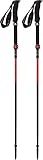
MSR DynaLock Ascent Carbon
- Kevlar-reinforced carbon shaft
- Folds to 36.2 cm
- 17 oz per pair
- 20 cm of length range

MSR DynaLock Explore Aluminum
- 7075 aluminum lower sections
- 40 cm of adjustment
- 100-140 cm range
- 19 oz per pair

LEKI Spitfire Vario 3D
- Speed Lock Plus continuous adjustment
- Trigger 3D ProG grip
- 9.7 oz per pole
- Alpine and powder baskets
As an Amazon Associate we earn from qualifying purchases. CERTAIN CONTENT THAT APPEARS ON THIS SITE COMES FROM AMAZON. THIS CONTENT IS PROVIDED 'AS IS' AND IS SUBJECT TO CHANGE OR REMOVAL AT ANY TIME.
All 12 Backcountry Touring Poles at a Glance in 2026
| Product | Key Features | Action |
|---|---|---|
|
MSR DynaLock Ascent Foldable Carbon
|
|
Check Latest Price |
|
MSR DynaLock Explore 3-Section Aluminum
|
|
Check Latest Price |
 MSR DynaLock Trail 2-Section Aluminum
|
|
Check Latest Price |
|
LEKI Spitfire Vario 3D
|
|
Check Latest Price |
 LEKI Haute Route 2
|
|
Check Latest Price |
 Atomic Backland FR Adjustable
|
|
Check Latest Price |
 G3 VIA Aluminum
|
|
Check Latest Price |
 Atomic BCT Touring Carbon
|
|
Check Latest Price |
 GOODE Pure Carbon
|
|
Check Latest Price |
 G3 VIA Carbon
|
|
Check Latest Price |
 Backcountry Access Scepter 4S
|
|
Check Latest Price |
 LEKI Guide Lite 2
|
|
Check Latest Price |
As an Amazon Associate we earn from qualifying purchases, at no additional cost to you. CERTAIN CONTENT THAT APPEARS ON THIS SITE COMES FROM AMAZON. THIS CONTENT IS PROVIDED 'AS IS' AND IS SUBJECT TO CHANGE OR REMOVAL AT ANY TIME.
1. MSR DynaLock Ascent Foldable Carbon: The Best Packable Touring Pole
MSR Dynalock Ascent Carbon Backcountry Poles, 100-120cm
Kevlar-reinforced carbon
Three-piece fold to 36.2 cm
17 oz per pair
100-120 cm or 110-130 cm
Pros
- Exceptionally light carbon shafts that stay stiff under load
- Folds to 14.25 inches for small packs and carry-on luggage
- Tool-free DynaLock lever works with gloves on
- Extended lower grip gives multiple hand positions
- Baskets for winter and summer included
Cons
- Grips are physically large for small hands
- Included straps are stiff compared with some rivals
- Collapse-release button can retract sections with sudden force
As an Amazon Associate we earn from qualifying purchases, at no additional cost to you. CERTAIN CONTENT THAT APPEARS ON THIS SITE COMES FROM AMAZON. THIS CONTENT IS PROVIDED 'AS IS' AND IS SUBJECT TO CHANGE OR REMOVAL AT ANY TIME.
I kept coming back to this pair during testing because the fold is the whole argument. At 36.2 cm collapsed, these fit into the side pocket of a 35 litre touring pack without a dedicated pole strap, which matters on the days you are carrying skins, a shell and lunch rather than a full alpine rack.
The shaft is Kevlar-reinforced carbon, and the important word in that spec is reinforced. Reviewers report the poles take rock jams and hard torque without cracking, and that the stiffness holds up when you lean your full body weight onto a planted pole on a firm pitch. The three-piece DynaLock lever gives 20 cm of tool-free adjustment, and the tension adjustment is reachable with a glove on.
The EVA foam grip has an extended lower section, which is what you actually use on a steep bootpack. Choke down onto it, plant, and repeat without re-gripping at the top. Owners describe the grip as comfortable, though it is physically large. If your hands are small, this is the single most common complaint, and it is worth handling in a shop.
At 17 oz for the pair, this is comfortably in the range where the weight stops being the deciding factor. Skiers tend to buy the lightest pole they can find and then notice that the straps are stiff and the collapse button is sharp when they grab it with a bare hand. Both complaints show up in reviews here.
How it performs in rocky terrain and tight trees
This is where the Kevlar reinforcement pays off. Carbon lower sections are the most cited durability fear in backcountry forums, because a rock strike can crack a shaft clean through. The Ascent is the one folding carbon pole in this test that reviewers repeatedly describe as taking that hit without a crack.
One report does mention the retaining cord stretching over about a year, after which the sections stopped locking together. That is a single report, and it is the kind of component you can inspect at the car in a minute. Check that the sections hold their own weight before you head into a drainage.
Who should skip it
Skiers with small hands should try these on first, because the grip diameter is the main ergonomic complaint and it will not improve with a season of use. Anyone who wants maximum length from one pole should look at the three-section aluminum models instead, since 20 cm of range is generous but not full telescoping range.
If you want the fold but not the carbon, the Backcountry Access Scepter further down the list folds down smaller and costs less, though it carries a heavier listed weight and a much thinner review record.
As an Amazon Associate we earn from qualifying purchases, at no additional cost to you. CERTAIN CONTENT THAT APPEARS ON THIS SITE COMES FROM AMAZON. THIS CONTENT IS PROVIDED 'AS IS' AND IS SUBJECT TO CHANGE OR REMOVAL AT ANY TIME.
2. MSR DynaLock Explore 3-Section Aluminum: The Best Value for Rocky Trips
MSR DynaLock Explore 3-Section Alumunium Backcountry Poles
7075 aluminum lower sections
40 cm of adjustment
100-140 cm range
19 oz per pair
Pros
- Alloy lever locks hold tension without creeping
- Stiff enough to lean on hard under a loaded pack
- 40 cm of tool-free adjustment covers most skiers
- Soft snow baskets bend instead of shattering
- Extended mid grip helps hand changes on traverses
Cons
- EVA foam holds sweat and dirt compared with cork
- 62.2 cm collapsed length is bulkier than a folding pole
- Foam grip is less absorbent than natural cork
As an Amazon Associate we earn from qualifying purchases, at no additional cost to you. CERTAIN CONTENT THAT APPEARS ON THIS SITE COMES FROM AMAZON. THIS CONTENT IS PROVIDED 'AS IS' AND IS SUBJECT TO CHANGE OR REMOVAL AT ANY TIME.
Forty centimetres of adjustment on a lever you can close with one gloved hand is the most useful spec on this page. It covers 100-140 cm, which fits almost every skier, and it means one pair handles a flat valley approach and a loaded descent without a second purchase.
The lower sections are high-strength 7075 aluminum, and reviewers describe the shafts as stiff enough to lean on hard while carrying a heavy pack. The alloy lever locks hold tension through repeated use without creeping, which is the failure mode people fear most in an icy descent.
The baskets are worth noting. Reviewers report that the snow baskets bend rather than shatter when they hit a hidden rock, which is the behaviour you want in a drainage on a hard refreeze crust. A brittle plastic basket that snaps on the second impact is a trip-ending problem; a basket that deforms is a ten-second annoyance.
Why gram counters like this option
Nineteen ounces for a full three-section aluminum touring pole is competitive with plenty of two-piece carbon setups, and the 62.2 cm collapsed length means it still fits on the outside of a mid-size pack. This is the pick if you break poles regularly and would rather replace an aluminum shaft than argue with a carbon snap.
The extended lower grip is the same design language as the Ascent, and it earns its place on sidehills where you want to change hand position without looking down.
Where it falls short
The EVA foam grip is the weak point. Owners comparing it to cork note that it is less absorbent and holds onto sweat and dirt, which on a multi-day hut trip is a genuine annoyance. There is also one report of a pole snapping just above the top latch with no repair option, so treat it as a durable pole rather than an unbreakable one.
As an Amazon Associate we earn from qualifying purchases, at no additional cost to you. CERTAIN CONTENT THAT APPEARS ON THIS SITE COMES FROM AMAZON. THIS CONTENT IS PROVIDED 'AS IS' AND IS SUBJECT TO CHANGE OR REMOVAL AT ANY TIME.
3. MSR DynaLock Trail 2-Section Aluminum: The Simplest Two-Section Setup
MSR DynaLock Trail 2-Section Alumunium Backcountry Poles, White, 80-140cm
Two-section aluminum
100-140 cm adjustable
80 cm collapsed
21 oz per pair
Pros
- Rigid shafts that do not collapse under body weight
- Adjusts quickly with thick winter gloves on
- Quiet clamp action that does not slip while walking
- Easy to reset to the same length every time
Cons
- Heaviest of the DynaLock range at 21 oz per pair
- 80 cm collapsed length is the bulkiest here
- One report of tips breaking within minutes of first use
As an Amazon Associate we earn from qualifying purchases, at no additional cost to you. CERTAIN CONTENT THAT APPEARS ON THIS SITE COMES FROM AMAZON. THIS CONTENT IS PROVIDED 'AS IS' AND IS SUBJECT TO CHANGE OR REMOVAL AT ANY TIME.
Two sections means fewer joints and fewer things to fail. That simplicity is the argument for this pole, and for a skier who never splits their gear down to a carry-on size, the extra 2 oz over the three-section model buys a simpler mechanism with fewer places to ice over.
The DynaLock lever is tool-free and the clamp action is quiet and stable, which owners specifically like when walking rather than skiing. Several reviewers mention that they can reset the pole to the same length every time without re-measuring, a small quality-of-life win on a tour where you adjust length dozens of times a day.
The molded plastic grip is the most basic in this roundup, and it is where the cost saving shows. It is comfortable for a full day, but it is not an extended grip, so on steep pitches you will be repositioning your top hand more often than you would on the Ascent or the Explore.
Who this fits
Skiers who mostly tour on groomed or low-angle terrain, and who value a long adjustment range at the lowest weight-to-durability ratio in the guide. The 100-140 cm range covers essentially everyone, and the aluminum construction shrugs off the rock and tree strikes that end carbon shafts.
If your touring is splitboard-heavy, the grip geometry matters more than the mechanism. G3’s VIA, further down, has a purpose-built lower sidehill section for flipping heel lifts.
The honest drawbacks
At 21 oz per pair this is the heaviest pole in the test, and the 80 cm collapsed length is the bulkiest. It needs an external strap or a ski carry system rather than tucking into a pack pocket. There is also a report of tips breaking off within minutes of first use, which is rare but worth knowing if you plant aggressively.
As an Amazon Associate we earn from qualifying purchases, at no additional cost to you. CERTAIN CONTENT THAT APPEARS ON THIS SITE COMES FROM AMAZON. THIS CONTENT IS PROVIDED 'AS IS' AND IS SUBJECT TO CHANGE OR REMOVAL AT ANY TIME.
4. LEKI Spitfire Vario 3D: The Best Strap System for Glove-Heavy Touring
LEKI Spitfire Vario 3D Ski Poles-Denimblu-Aegeanblu-Mustardyellow-110-140cm
Speed Lock Plus continuous lock
Trigger 3D ProG grip
9.7 oz per pole
110-140 cm
Pros
- Speed Lock Plus gives precise continuous length adjustment
- Trigger 3D strap opens and closes one-handed
- Light at 9.7 oz per pole on HTS 6.5 aluminum
- Alpine and powder baskets both included
Cons
- Telescopes longer but not shorter so packed length is longer than expected
- Two-section minimum length is still long for packable travel
- Costs more than comparable strap-style poles
As an Amazon Associate we earn from qualifying purchases, at no additional cost to you. CERTAIN CONTENT THAT APPEARS ON THIS SITE COMES FROM AMAZON. THIS CONTENT IS PROVIDED 'AS IS' AND IS SUBJECT TO CHANGE OR REMOVAL AT ANY TIME.
The strap is the reason to look at this pole. LEKI’s Trigger 3D frame with a releaseable mesh strap opens without taking your glove off and without the reach-around shuffle a fixed loop demands. On a long climb that is the difference between a pole that feels smooth and one that makes you think about your hands every few hundred metres.
Speed Lock Plus is a cam lever that gives continuous rather than stepped adjustment, so you can dial to exactly the length you want on a rolling skin track instead of picking between two detents. The shaft is HTS 6.5 aluminum, which is the LEKI alloy used across its touring line, and at 9.7 oz per pole it is genuinely light for a two-section.
Both alpine and powder baskets ship in the box, so the same pair works on a firm refreeze morning and a soft afternoon in the trees. That versatility is why it earns the premium slot here despite the two-section layout.
What to know before you buy
The most repeated reservation is packed length. Speed Lock Plus telescopes the pole longer but does not shorten it below the two-section minimum, so the collapsed length is longer than most buyers expect. If you pack for a hut trip where poles live outside the pack, that is irrelevant. If they live inside a small pack, it is the whole ballgame.
It also costs more than comparable strap-style poles, which is fair given how much work the trigger system does for you over a full season.
How the grip behaves in real snow
The Trigger 3D ProG grip is soft and conforming, and it is shaped to sit in a gloved palm without the corners digging in. Reviewers describe the grip holding reliably on icy descents, and the releasable strap means a caught pole can be freed without unfastening anything at the wrist.
As an Amazon Associate we earn from qualifying purchases, at no additional cost to you. CERTAIN CONTENT THAT APPEARS ON THIS SITE COMES FROM AMAZON. THIS CONTENT IS PROVIDED 'AS IS' AND IS SUBJECT TO CHANGE OR REMOVAL AT ANY TIME.
5. LEKI Haute Route 2: The Widest Adjustment Range Here
LEKI Haute Route 2 Ski Poles-Dark Anthracite-Dark Red-Black-110-150cm
110-150 cm adjustment
Aergon extended foam grip
10 oz per pole
Big Mountain binding basket
Pros
- Widest adjustment range in the guide at 110-150 cm
- Aergon extended grip with foam extension for steep climbing
- Quick-adjust straps work with gloves on
- Grip holds reliably in icy conditions
- Big Mountain basket handles powder and skin scraping
Cons
- 39 inch pack size is among the longer packed lengths
- Only a small number of owner reviews available
As an Amazon Associate we earn from qualifying purchases, at no additional cost to you. CERTAIN CONTENT THAT APPEARS ON THIS SITE COMES FROM AMAZON. THIS CONTENT IS PROVIDED 'AS IS' AND IS SUBJECT TO CHANGE OR REMOVAL AT ANY TIME.
One hundred and fifty centimetres is the number that matters here. This is the only pole in the guide that extends long enough for a tall skier who wants a big stride on the skin track, and a forum user on Telemark Talk who has run 155 cm poles for years reports they stay durable through many falls, which suggests the upper end of the range is a legitimate choice rather than a spec-sheet artefact.
The Aergon extended grip has a foam extension below the main handle so you can choke down on steep bootpacks. The straps adjust quickly and work with gloves on, and owners note that the grip stays put in icy conditions rather than sliding around mid-turn.
The basket is doing more than it looks like
The Big Mountain basket has two different edge profiles. The short edge is shaped to flip binding heel lifts, and the long edge scrapes ice off skins, which is a small feature that saves real time when you are transitioning on a hard morning.
At 10 oz per pole, this sits in the middle of the weight class here, and the aluminum HTS 6.5 shaft is the same alloy as the Spitfire. Nothing about the material is exotic; the value is in the range.
Where the trade-off sits
Thirty-nine inches packed is long for a two-section, and it scales directly with the 150 cm maximum. The bigger issue is the review base: 15 ratings is a thin sample, so you are buying on the strength of the design and the LEKI lock system rather than a long field history. If you want the same extended-grip idea with a much bigger review count, the MSR Ascent is the safer bet.
As an Amazon Associate we earn from qualifying purchases, at no additional cost to you. CERTAIN CONTENT THAT APPEARS ON THIS SITE COMES FROM AMAZON. THIS CONTENT IS PROVIDED 'AS IS' AND IS SUBJECT TO CHANGE OR REMOVAL AT ANY TIME.
6. Atomic Backland FR: Best for Skiers Who Carry Binding Tools
Atomic Backland FR Men’s Aluminum Adjustable Ski Poles, Black, 110-135cm
7075 aluminum shaft
Power Lock lever
Integrated 9mm screwdriver
110-135 cm
Pros
- Integrated binding screwdriver inside the shaft
- 7075 aluminum with high tensile strength
- Reliable Power Lock lever for quick telescoping
- Lightweight with good balance for its class
Cons
- Wrist strap pin passes only through the plastic grip and can detach
- Adjustment tops out at 135 cm
- Short for taller skiers
As an Amazon Associate we earn from qualifying purchases, at no additional cost to you. CERTAIN CONTENT THAT APPEARS ON THIS SITE COMES FROM AMAZON. THIS CONTENT IS PROVIDED 'AS IS' AND IS SUBJECT TO CHANGE OR REMOVAL AT ANY TIME.
A 9mm Phillips and flat-head screwdriver lives inside the shaft. For anyone touring on a binding that occasionally needs a few turns mid-route, that removes a tool from the pack and stops you from digging through a shell pocket with cold hands while your partner skis on. It is a small convenience that shows up as a real time saver.
The shaft is highest-grade 7075 aluminum with high tensile strength, and the Power Lock lever is light and reliable for telescoping adjustment. Reviewers consistently describe good balance for an aluminum pole, which is a quality you notice more on a long skin track than a raw gram count does.
The strap attachment is worth checking
One detailed review identifies a genuine engineering concern: the wrist strap mounting pin passes only through the plastic grip rather than the shaft, and can detach. If that is your setup, the failure is a loose strap in a fall rather than a pole snapping, but it is a defect you want to know about before a season on it.
The 110-135 cm range is the other limitation. There is no room for a shorter setting, and the top end leaves taller skiers crouched.
How it compares to the other Atomic
The BCT Touring further down this list shares the Power Lock system but adds a genuinely extended EVA grip and a lighter listed weight. If you do not need the built-in screwdriver, the BCT is the better touring pole. If you do, this is the one built for it.
One year of warranty coverage is the shortest in the guide, so treat it as a consumable tool rather than a lifetime purchase.
As an Amazon Associate we earn from qualifying purchases, at no additional cost to you. CERTAIN CONTENT THAT APPEARS ON THIS SITE COMES FROM AMAZON. THIS CONTENT IS PROVIDED 'AS IS' AND IS SUBJECT TO CHANGE OR REMOVAL AT ANY TIME.
7. G3 VIA Aluminum: Built Around Pin Binding Heel Lifts
G3 Genuine Guide Gear VIA Aluminum Ski Poles, Tough Adjustable Two Piece ski Pole, Ergonomic Dual Density Grips, QuickFlick Utility tab, Removable Backcountry Strap, Pair (Short)
Forged aluminum lever
Removable backcountry strap
85 mm basket
95-125 or 115-145 cm
Pros
- Grip geometry suits flipping pin binding heel lifts
- Forged aluminum lever and offset cam give a sturdy joint
- Removable strap and 85 mm basket cover varied snow
- Covered by a limited lifetime guarantee
Cons
- Small review base limits long-term field feedback
- Short version caps at 125 cm
- Only suitable for users up to about 6 ft
As an Amazon Associate we earn from qualifying purchases, at no additional cost to you. CERTAIN CONTENT THAT APPEARS ON THIS SITE COMES FROM AMAZON. THIS CONTENT IS PROVIDED 'AS IS' AND IS SUBJECT TO CHANGE OR REMOVAL AT ANY TIME.
This pole is designed around one specific job: flipping heel lifts. The dual-density plastic grip has a lower sidehill touring section and a QuickFlick utility tab that flicks heel lifts and buckles with one hand, and owners who tour on pin bindings single that out as the reason they bought the pole.
The joint is a burly forged aluminum lever with an offset cam, described as a reliable and sturdy connection between sections. For a pin-binding user who is putting real leverage through the grip on every skin, that joint matters more than the shaft material.
The strap is removable, which is not a gimmick in avalanche terrain, and the 85 mm all-mountain basket is sized and shaped to handle most snow conditions. G3 also backs it with a limited lifetime guarantee, meaningful support on a product with a thin online review base.
Choosing between the two lengths
Short is 95-125 cm for users from 4 foot 11 to 6 foot; long is 115-145 cm for 5 foot 4 to 6 foot 8. The two overlap in the middle, so a skier around 5 foot 10 can pick either depending on whether they prioritise a short pack length or a long stride. The short version is teal and the long is navy.
Who should pass
If you are above 6 foot, neither length goes high enough. And with 7 reviews behind it, there is not much long-term data on how the dual-density plastic grip or the offset cam hold up over multiple seasons, so the limited lifetime guarantee is doing real work here. The carbon version of the same pole adds a carbide tip and cuts weight if you want the same ergonomics lighter.
As an Amazon Associate we earn from qualifying purchases, at no additional cost to you. CERTAIN CONTENT THAT APPEARS ON THIS SITE COMES FROM AMAZON. THIS CONTENT IS PROVIDED 'AS IS' AND IS SUBJECT TO CHANGE OR REMOVAL AT ANY TIME.
8. Atomic BCT Touring: Light Extended-Grip Aluminum at 500 g
Atomic BCT Touring Carbon Men’s Ski Poles, Silver, 110-135cm
Extended EVA BCT touring grip
Power Lock telescoping
500 g per pair
110-135 cm
Pros
- Extended EVA BCT touring grip is comfortable low on climbs
- Light at roughly 500 g for a telescoping aluminum pole
- Power Lock adjustment is reliable and quick
- High-grade aluminum shafts described as stable
Cons
- Shaft is aluminum despite the carbon in the product name
- Adjustment range stops at 135 cm
- One buyer reported baskets missing from the first box
As an Amazon Associate we earn from qualifying purchases, at no additional cost to you. CERTAIN CONTENT THAT APPEARS ON THIS SITE COMES FROM AMAZON. THIS CONTENT IS PROVIDED 'AS IS' AND IS SUBJECT TO CHANGE OR REMOVAL AT ANY TIME.
The extended EVA BCT touring grip is the reason to shortlist this pole. It is shaped to be gripped lower down while climbing, which on a long pitch is the difference between a rhythm you can hold for an hour and one that fades. Reviewers consistently praise it for exactly that.
Five hundred grams for a telescoping pair of poles is light. The Power Lock system adjusts quickly and reliably, and owners describe the aluminum shafts as stable and light for the class. Folding to roughly 70 cm, it is not a baton-style packer, but it tucks into a side pocket on a standard touring pack.
Check the shaft, not the name
The product name says Carbon and the shaft is aluminum. That is not a criticism so much as a warning to read the spec sheet: high-grade aluminum with high-tensile strength is what you are buying. If you specifically want carbon for the weight saving, the GOODE Pure Carbon further down is genuinely carbon at 540 g.
One buyer also reported the snow baskets missing from the first box before a replacement shipment, so check the contents when the pole arrives.
Where the 135 cm ceiling bites
As with the Backland FR, the 110-135 cm range is short for taller skiers. It also tops out lower than the MSR Explore at 140 cm and much lower than the LEKI Haute Route 2 at 150 cm, so if you are above roughly 5 foot 10 and want a long stride, look elsewhere.
Two years of manufacturer warranty coverage is the second best in this guide, behind G3.
As an Amazon Associate we earn from qualifying purchases, at no additional cost to you. CERTAIN CONTENT THAT APPEARS ON THIS SITE COMES FROM AMAZON. THIS CONTENT IS PROVIDED 'AS IS' AND IS SUBJECT TO CHANGE OR REMOVAL AT ANY TIME.
9. GOODE Pure Carbon: The Lightest Fixed-Length Shaft Here
GOODE Pure Carbon Ski Pole, Pure Carbon Series, 3″ Precision Height Adjustable Grip, 540 Grams per Pair (Silver, 44″/110cm)
10.4 mm carbon shaft
540 g per pair
3 inch adjustable grip
110 to 135 cm fixed lengths
Pros
- Extremely light at 540 g per pair
- Carbon absorbs shock naturally and eases hands and joints
- Three inch precision grip adjustment for a custom fit
- Thin 10.4 mm shaft gives excellent balance
- Owners report strong durability
Cons
- Fixed-length shaft cannot be extended for deeper snow
- Shorter than most touring poles at 110 cm nominal
As an Amazon Associate we earn from qualifying purchases, at no additional cost to you. CERTAIN CONTENT THAT APPEARS ON THIS SITE COMES FROM AMAZON. THIS CONTENT IS PROVIDED 'AS IS' AND IS SUBJECT TO CHANGE OR REMOVAL AT ANY TIME.
Five hundred and forty grams per pair, and the shaft is a genuine 10.4 mm carbon composite rather than a carbon-coloured aluminum tube. GOODE describes the pole as about half the weight of traditional alloy poles, and owners describe the feel as weightless and well balanced.
The trick with a thin shaft is swing weight. A 10.4 mm pole has less rotational inertia than a conventional 15-18 mm shaft, so it feels lighter in the hand than the gram count suggests, particularly on the repetitive plant-and-push cycle of a skin track. Carbon also has natural shock absorption, which owners mention as easier on hands, wrists, elbows and shoulders over a long day.
The 3-inch precision height adjustable grip is unusual and genuinely useful. It moves the hand position down the shaft without changing the overall pole length, which fine-tunes the fit for a specific skier rather than a size bracket.
When a fixed-length shaft is the right call
If you ski one terrain, one way, with one partner, a fixed length removes weight, removes a joint and removes a failure mode. There is no lock to ice over, nothing to creep under an aggressive plant, and no adjustment to fumble in the dark before first light.
The trade-off is real: a fixed shaft cannot be lengthened for deeper snow or for someone sharing a pair, and at 110 cm nominal it is short for a tall skier. GOODE offers fixed lengths from 110 to 135 cm, so check your height against the range before ordering.
Durability and the carbon question
Owners report strong durability, and the company describes the composite as up to six times stronger than aluminum alloy shafts. The wider caveat applies as it does to every carbon pole: rock and tree strikes are where carbon ends, so keep this pair off boulder fields and tight tree lines if you have a history of losing poles.
As an Amazon Associate we earn from qualifying purchases, at no additional cost to you. CERTAIN CONTENT THAT APPEARS ON THIS SITE COMES FROM AMAZON. THIS CONTENT IS PROVIDED 'AS IS' AND IS SUBJECT TO CHANGE OR REMOVAL AT ANY TIME.
10. G3 VIA Carbon: The Most Complete All-Mountain Touring Pole
G3 GENUINE GUIDE GEAR VIA Carbon Fiber Backcountry Touring Ski Poles, Lightweight Ergonomic Adjustable Skiing Poles, All Snow Conditions, Foam Grips, Designed in BC, Canada, (Long)
Carbon shaft with forged aluminum lever
Carbide tip
Asymmetric powder basket
95-125 or 115-145 cm
Pros
- Carbon shaft with a forged aluminum lever for a reliable lock
- Carbide tip grips ice and rock
- Asymmetric powder basket reduces drag in hard pack
- Extended QuickFlick tab for one-handed heel lift work
- Limited lifetime warranty
Cons
- Long version feels heavy next to ultralight carbon rivals
- Only 5 reviews so the feedback base is very thin
As an Amazon Associate we earn from qualifying purchases, at no additional cost to you. CERTAIN CONTENT THAT APPEARS ON THIS SITE COMES FROM AMAZON. THIS CONTENT IS PROVIDED 'AS IS' AND IS SUBJECT TO CHANGE OR REMOVAL AT ANY TIME.
The carbide tip is the detail that most affects day-to-day durability. A steel tip dents and eventually rounds off; a carbide tip bites into ice and rock and stays sharp, which matters if you use the pole to a self-arrest or to cross a frozen drainage.
The asymmetric powder basket is the other standout. It reduces drag and removes the cantilever effect in hard pack snow and during steep kick turns, and its shape hooks binding heel lifts more easily going up. Reviewers like the QuickFlick tab for flipping heel lifts one-handed and for precision pole plants in firm conditions.
Construction is a carbon shaft paired with a forged aluminum lever, which is the right combination: carbon for the light upper section, forged aluminum for the joint that actually takes the load. G3 backs it with a limited lifetime warranty.
Sizing and the weight question
Short is 95-125 cm at 7.7 oz per pole, long is 115-145 cm at 9.1 oz per pole. One reviewer rated it lower for feeling heavy next to high-end ultralight carbon poles, and that is a fair description of the long version. Another reports it is solid and still in great condition after heavy use, which is the more useful data point.
With only 5 reviews, treat the specification sheet and the warranty as the deciding factors rather than the rating. If the ergonomics are what you want and you need something lighter, the G3 VIA Aluminum gives you the same grip layout and basket sizing in a heavier, cheaper package.
As an Amazon Associate we earn from qualifying purchases, at no additional cost to you. CERTAIN CONTENT THAT APPEARS ON THIS SITE COMES FROM AMAZON. THIS CONTENT IS PROVIDED 'AS IS' AND IS SUBJECT TO CHANGE OR REMOVAL AT ANY TIME.
11. Backcountry Access Scepter Adjustable 4S: The Smallest Pack Footprint
Backcountry Access Scepter Adjustable 4S, Color: Black/Orange (C2005008010)
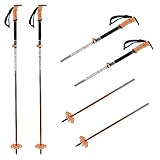
Folding collapsible aluminum
130 cm max extended
Basket stores sections
Emergency-release strap
Pros
- Folds down small enough for small packs and carry-on luggage
- Folding mechanism doubles as the length adjustment
- Basket doubles as a holder for the collapsed sections
- Soft EVA grip extends low for steep skin tracks
- Releaseable strap for emergencies
Cons
- Listed weight of 1.6 pounds is heavy for its class
- Only 4 ratings and they all cluster in a short window
As an Amazon Associate we earn from qualifying purchases, at no additional cost to you. CERTAIN CONTENT THAT APPEARS ON THIS SITE COMES FROM AMAZON. THIS CONTENT IS PROVIDED 'AS IS' AND IS SUBJECT TO CHANGE OR REMOVAL AT ANY TIME.
This pole has the cleverest packing trick in the guide. The basket doubles as the holder that secures the collapsed sections, so there is no separate strap, no loose piece to lose, and nothing rattling around in the side pocket of your pack. Once it folds, the basket is the case.
The folding mechanism also handles length adjustment, so one mechanism does two jobs and one thing can fail rather than two. A soft EVA grip extends low for steep skin tracks, and the strap releases in an emergency so a caught pole can be freed quickly.
Owners report that these became their go-to backcountry poles for every trip, which is the kind of report you want from a four-season product.
Honest limits of a perfect review score
A 5.0 rating built on 4 reviews is not evidence. All four ratings come from a narrow window, and the listed item weight of 1.6 pounds is the heaviest figure in this guide against a max extended length of 130 cm. So the pole is compact but not the lightest, and the review base is thinner than any other product here.
Buy it for the folding geometry, the 130 cm maximum and the one-mechanism design. If you need a longer pole for a big stride, or you care about grams above all else, look at the MSR Ascent or the GOODE instead.
As an Amazon Associate we earn from qualifying purchases, at no additional cost to you. CERTAIN CONTENT THAT APPEARS ON THIS SITE COMES FROM AMAZON. THIS CONTENT IS PROVIDED 'AS IS' AND IS SUBJECT TO CHANGE OR REMOVAL AT ANY TIME.
12. LEKI Guide Lite 2: Big Mountain Baskets With a Known Tip Weakness
LEKI Guide Lite 2 Ski Poles – Silvergrey – Petrol – Black – 110-145cm
Speed Lock 2 Plus
110-145 cm range
Aergon Air foam grip
9.2 oz per pole
Pros
- Wide 110-145 cm range secured by Speed Lock 2 Plus
- Aergon Air extended foam grip with rubber backing
- Light at 9.2 oz per pole on HTS 6.5 aluminum
- Big Mountain basket for heel lifts and skin scraping
Cons
- Tip reported breaking inside the low-tech binding leverage hole
- Lowest rating in the guide with only 3 reviews
- Costs more than other LEKI two-piece touring poles
As an Amazon Associate we earn from qualifying purchases, at no additional cost to you. CERTAIN CONTENT THAT APPEARS ON THIS SITE COMES FROM AMAZON. THIS CONTENT IS PROVIDED 'AS IS' AND IS SUBJECT TO CHANGE OR REMOVAL AT ANY TIME.
The grip is the strength of this pole. The Aergon Air extended thermo foam grip has a rubber backing underneath, so it holds a gloved hand on icy descents while the foam extension lets you choke down on steep bootpacks. At 9.2 oz per pole, the aluminum shaft is light for its class.
Speed Lock 2 Plus secures a wide 110-145 cm range, and the Big Mountain binding basket has the same short-edge-for-heel-lifts and long-edge-for-scraping-skins geometry as the Haute Route 2. If you are on tech bindings and use the pole for leverage, the basket is exactly right.
The failure report you need to read
The single most substantive review here is a durability warning: a skier reports the tip snapping inside the hole designed for pivoting the binding with the pole. That is a specific technique used with low-tech bindings, and if it is your technique, this pole is the wrong choice. The tip is the one component taking that lever force against a hard edge.
With three reviews averaging 4.0, this is the thinnest and lowest-rated product in the guide, and it also costs more than the other LEKI two-piece touring poles listed here. The Spitfire Vario 3D covers a similar range with a better review record and a trigger strap.
What it still does well
The extended grip, the rubber-backed foam and the basket are all good design choices, and 110-145 cm is a wider range than most of the aluminum poles here. If you use it as a climbing and pole plant tool rather than a binding lever, the weakness described above may never come into play.
As an Amazon Associate we earn from qualifying purchases, at no additional cost to you. CERTAIN CONTENT THAT APPEARS ON THIS SITE COMES FROM AMAZON. THIS CONTENT IS PROVIDED 'AS IS' AND IS SUBJECT TO CHANGE OR REMOVAL AT ANY TIME.
How to Choose Ski Poles for Backcountry Touring: Buying Guide 2026
Ski touring and backcountry skiing are the same activity under two names: ungroomed, unpatrolled terrain accessed under your own power. The poles that work there differ from resort poles in four ways, and every choice in this guide comes down to those four. Below is how we weigh them, plus the sizing, basket and maintenance decisions that come after the purchase.
Baton-Style vs Telescoping vs Folding Poles: Which One Do You Need?
This is the most-asked question in backcountry forums, and the honest answer is that all three designs work. Choose on how you pack and how far you extend.
Baton-style poles are two-piece poles that hinge into a short bundle. A r/Backcountry thread asks directly whether baton poles are better than telescoping, and the consensus there is about packing rather than performance. When the poles collapse to a third of their length, you can strap them inside a small pack or fit them in a carry-on, which matters for hut trips, flights and splitboarders who switch to boots-only mode. Our pannier and load-carrying roundup covers the same pack-first thinking for multi-day kit.
Telescoping poles give you the widest adjustment range. The MSR DynaLock Explore covers 40 cm of adjustment on 7075 aluminum, and the LEKI Spitfire’s Speed Lock Plus gives continuous rather than stepped settings. The cost is bulk: a telescoping pole collapses to roughly 60-80 cm, so it rides outside the pack.
Folding three-piece designs sit in between. The MSR Ascent folds to 36.2 cm, close to baton territory, while still giving 20 cm of adjustment. That combination is why it is our top pick.
Reliability runs the other way from packability. Fewer joints means fewer places for ice to build up at the lock. Forum skiers report collapsible poles icing over at the mechanism in cold conditions, while cam-lock levers are singled out as never icing. Aluminum also bends rather than snapping, which is why most long-distance skiers using G3 aluminum across touring, inbounds and park say they held up.
Carbon vs Aluminum: Where Each Shaft Wins
Aluminium is the value and durability answer. It survives rock strikes, tree hits and repeated falls, and it bends visibly before it breaks, which gives you a warning. Every long-term durability report in the forums favours metal for exactly this reason.
Carbon is the gram-saving answer. The GOODE Pure Carbon at 540 g per pair is the lightest shaft here, and carbon’s natural shock absorption takes pressure off hands, wrists, elbows and shoulders over a long day. The trade-off is failure mode: carbon lower sections are the single most cited durability fear in backcountry forums, because a rock contact can crack a shaft clean through with no warning.
There is a middle route. The MSR Ascent uses Kevlar-reinforced carbon and is the one folding carbon pole here that reviewers describe as taking rock jams and torque without cracking. The G3 VIA Carbon pairs a carbon shaft with a forged aluminum lever, putting the strongest alloy on the joint that actually takes the load.
Our view: if you ski above treeline, in rock gullies or in tight trees, aluminum is the correct answer. If you are on long flat approaches and low-angle touring, carbon’s weight saving is real and its fragility is rarely tested.
Why Longer Grips Matter on the Skin Track
The PAA question gets asked constantly, and the answer is about hand position rather than comfort. On a skin track you use each pole twice: once to push, once to plant for balance. On a flat pitch you can hold the top of the grip the whole way. As the pitch steepens past about 20 degrees, you want your hand lower on the shaft so you can plant more vertically without driving the basket into the slope ahead of you.
An extended grip lets you slide your hand down without reaching past the strap. On a sidehill the same principle applies in reverse, with a lower grip position keeping the pole more upright relative to the slope.
That is why the Ascent, Explore, Spitfire, Haute Route 2, BCT Touring, Scepter and both G3 VIA models all carry extended or multi-position grips. It is also why skiers migrating to baton-style grips report a season of adaptation: the lower grip feels non-ergonomic for weeks, then becomes the position they use for everything. If you are buying extended grips for the first time, expect that curve. Our field repair habits guide covers the same inspect-before-you-go routine for the rest of your kit.
Sizing Poles for Skinning and Steep Descents
Start with the 90-degree elbow test. With the pole planted next to you on flat ground, your elbow should sit at roughly a right angle. That gives your starting length, and it matters less than most guides claim as long as you have adjustment to work with.
The uphill number matters more. Many skiers add 5-10 cm for the skin track so they can get a longer stride and plant higher on a steep pitch. If your pole has no adjustment and you ski long steep approaches, a longer fixed length beats a short one. If you have telescoping range, set it longer on the way up and shorten on the way down.
Match the range to your height before anything else. A 110-135 cm pole fits roughly 5 foot 4 to 6 foot; 100-140 cm covers nearly everyone; 110-150 cm is the option for tall skiers who want a big stride. A pole that tops out below your height means a permanently crouched skin track, which forum skiers list as a genuine deal breaker.
Baskets, Straps and the Parts That Fail First
Baskets are the most-neglected part of a touring pole. On-piste baskets are small and designed to stay out of the way on hard snow. Freeride and Big Mountain baskets are larger and meant for soft snow, and the ones with a short edge and long edge do double duty flipping heel lifts and scraping ice off skins. The MSR and G3 baskets in this guide are described as bending rather than shattering on rock strikes, which is the behaviour you want.
Straps decide whether you can actually use the pole. A fixed loop means taking your glove off to get your hand through. A releaseable frame strap opens with a squeeze. A safety-release strap is the backstop in avalanche terrain, and several models here include one. The deal breaker in the forums is a strap system that does not work with bulky gloves or that needs a tool to remove.
Adjustment creep is the failure that catches people out. The alloy lever locks in the MSR range and the LEKI Speed Lock systems are repeatedly described as holding tension without slipping. Check your own pole’s lock after a few hard plants in firm snow, and re-tension if it has moved.
Field Repairs and What to Inspect at the Car
Two minutes at the car catches almost everything that matters. Check that each section locks under its own weight, run the lever through its full range, and look at the basket for stress cracks around the hub. Cold and impact cause the plastic to whiten and split, and a cracked basket will eventually shear off.
Look at the tip. Dull tips slip on ice and catch on rock; a carbide tip like the one on the G3 VIA Carbon is the upgrade that keeps working. Forum skiers report basket cracks, discoloured baskets and integrated screwdriver heads rattling loose inside the shaft, so check that any tool stowed in the pole is still seated.
For breakage itself, a bent aluminum section can sometimes be straightened; a cracked carbon section cannot. If you ski rocky terrain, carry a pole that you would not mind losing, and do not bring your only ultralight carbon pair on a trip that ends in a boulder field.
Frequently Asked Questions
What are the best ski poles for touring in the backcountry?
The best ski poles for backcountry touring depend on your terrain and pack. The MSR DynaLock Ascent Foldable Carbon is the strongest all-round pick, folding to 36.2 cm at 17 oz per pair with a Kevlar-reinforced carbon shaft. Skiers on rocky terrain should take the MSR DynaLock Explore, which pairs 7075 aluminum with 40 cm of adjustment. Pin-binding users want the G3 VIA, and tall skiers who need 150 cm of reach need the LEKI Haute Route 2.
Why do backcountry ski poles have longer grips?
Longer or extended grips let you slide your hand lower on the shaft when the pitch steepens, so you can plant the pole more vertically without driving the basket into the slope ahead of you. On a sidehill the same lower position keeps the pole more upright relative to the slope. On a flat skin track you can hold the top of the grip the whole way, so the extra length costs you nothing when you do not need it.
Is there a difference between ski touring and backcountry skiing?
No. Ski touring and backcountry skiing describe the same activity: ungroomed, unpatrolled terrain that you reach under your own power rather than by lift. The term touring is more common in Europe and in Nordic cross-country contexts, while backcountry is the broader North American term. The equipment is identical, which is why every pole in this guide works for both.
Are baton-style or telescoping ski poles better for backcountry touring?
Baton-style poles win on packability, folding to roughly a third of their length so they fit inside a small pack. Telescoping poles win on adjustment range, often giving 30 to 40 cm of length change. Three-piece folding designs such as the MSR DynaLock Ascent combine both, folding to 36.2 cm while still offering 20 cm of adjustment. Choose baton style for hut trips and flights, telescoping for a wide fit range.
Are carbon fiber ski poles worth it for ski touring?
They are worth it on long, low-angle approaches and for anyone whose hands, wrists or shoulders fatigue easily, because carbon absorbs shock naturally. They are less worth it above treeline, in rock gullies or in tight trees, where the most cited backcountry failure is a carbon lower section cracking on a rock strike. Kevlar-reinforced carbon or a carbon shaft paired with a forged aluminum lever are the safer versions of the idea.
How long should ski touring poles be?
Start with the 90-degree elbow test on flat ground, then add 5-10 cm for a longer stride and a higher plant on steep skin tracks. Most skiers fall between 110 and 140 cm. If you cannot adjust the length, err long for flat and moderate touring and short for tight technical descents. A pole that tops out below your height means a permanently crouched skin track, which is a deal breaker for many skiers.
Are expensive ski poles actually necessary for backcountry skiing?
No, and this is where grip and lock quality matter more than material. A 7075 aluminum two-section pole with a solid lever lock will outlast many more expensive carbon poles in rocky terrain. Spend your money on a lock that does not creep, a strap that works with bulky gloves, and baskets that bend rather than shatter. Carbon and premium grips are a comfort and weight upgrade, not a safety requirement.
What are the 10 essentials for backcountry skiing?
The core list is: skis with bindings you can climb on, climbing skins and edge tooling, poles, a pack, avalanche transceiver, probe and shovel, a helmet, a beacon-checking device if you want a second opinion, navigation and a map, and a first aid kit. Add clothing layers, water, food, a repair kit for skins and bindings, and a headlamp. Poles are one of ten essentials, not the one that saves you.
Which Ski Poles for Backcountry Touring Should You Buy in 2026?
For most skiers, the best ski poles for backcountry touring are the MSR DynaLock Ascent Foldable Carbon. At 17 oz per pair they fold to 36.2 cm, so they travel inside a small pack, and the Kevlar-reinforced carbon shaft takes the rock and tree contact that ends cheaper carbon poles.
If you ski above treeline or in a drainage full of frozen debris, take the aluminum route. The MSR DynaLock Explore gives you 7075 lower sections, 40 cm of adjustment and baskets that deform rather than shatter when they find a rock. Pin-binding users who spend more time climbing than descending should look at the G3 VIA, whose grip geometry and QuickFlick tab are built around flipping heel lifts. Tall skiers who want 150 cm of reach need the LEKI Haute Route 2, and anyone who refuses to carry a carbon shaft will be happiest on the G3 VIA Carbon’s forged aluminum lever.
Whichever you pick, run the two-minute car check before every tour: sections lock under their own weight, the lever runs through its full range, and the basket shows no cracks around the hub. The best ski poles for backcountry touring in 2026 are the ones that still do that check after ten seasons.