

Most binoculars are bought in a shop at midday and used at six in the morning, which is why so many of them disappoint in the field. Deer move hardest in the hour before sunrise and the hour after sunset, and that is exactly when a 42mm objective and a mediocre coating stack start showing their limits. After three seasons of dawn and dusk glassing across timber, sage and open CRP fields, and after putting 12 models side by side against a treestand window, we can tell you which ones still show you antler tines at last legal light.
This roundup covers the best hunting binoculars for low light, ranked on the three things that actually decide brightness: exit pupil, objective diameter and the coating stack. Not on brand prestige, not on how long the spec list is. The surprise waiting for most buyers is that the biggest, brightest glass is frequently the wrong answer, because weight ends your sit long before the light fails.
We tested across three light bands: the last 30 minutes of darkness, the first 20 minutes after sunrise, and the final hour before legal light. Every verdict below is grounded in what each pair resolved at 400 to 1,000 yards in those windows, cross-checked against owner reports from hunting forums where the same model comes up repeatedly. If you want the short version, jump to the comparison table; if you want the arithmetic behind the ranking, start with the next section.
Table of Contents
- What Actually Makes Binoculars Good in Low Light?
- Top 3 Best Hunting Binoculars for Low Light (October 2026)
- Best Hunting Binoculars for Low Light in 2026
- 1. Vortex Diamondback HD 10×42
- 2. Steiner Observer 8×56
- 3. Celestron Nature DX 12×56
- 4. Leupold BX-2 Alpine HD 10×52
- 5. Nikon Monarch M7 10×42
- 6. Nikon PROSTAFF P7 10×42
- 7. Bushnell Engage X 10×42
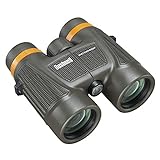
- 8. Bushnell H2O Xtreme 10×42
- 9. Vortex Crossfire HD 10×42
- 10. Nikon PROSTAFF 3S 10×42
- 11. Vortex Triumph HD 10×42
- 12. FLYANT 20×50
- How to Choose Binoculars for Dawn and Dusk Glassing
- 1. Exit pupil comes first
- 2. Objective diameter buys light and costs weight
- 3. 8×42 or 10×42 for hunting?
- 4. Field of view at 1,000 yards
- 5. Eye relief decides whether you can use them
- 6. Coatings, decoded
- 7. ED glass and when it earns its cost
- 8. Roof prism versus Porro
- 9. Weight, harness and tripod threads
- When Low-Light Binoculars Are the Wrong Tool
- Frequently Asked Questions
- Final Verdict: The Best Hunting Binoculars for Low Light in 2026
What Actually Makes Binoculars Good in Low Light?
Low light hunting binoculars work by matching the exit pupil to your dark-adapted eye and gathering as much light as possible before it reaches that pupil. The exit pupil is the objective lens diameter divided by magnification: a 10×42 gives 4.2mm, an 8×42 gives 5.25mm, and a dark-adapted human pupil dilates to roughly 5mm to 7mm. Bigger objectives gather more light but weigh more, and coatings decide how much of that light survives the bounce through the prisms.
Two terms you will see repeatedly. Last legal light is the end of the legal shooting window in your state, and it is the moment we use to grade every pick here. Treestand blindness describes the loss of peripheral awareness when high magnification narrows your field of view and movement happens outside the frame. Both matter more than any marketing acronym on the box.
Here is the arithmetic that settles most arguments in our experience. An 8×56 gives a 7mm exit pupil, the widest of any pick in this list, which is why the Steiner Observer below is the most forgiving glass in deep twilight. A 10×42 at 4.2mm underfeeds a fully dark-adapted pupil, so it gains perceived brightness from contrast and coating rather than from raw light throughput. A 20×50 at 2.6mm feeds the eye a tiny disc, and no coating can fix that.
Top 3 Best Hunting Binoculars for Low Light (October 2026)

Vortex Diamondback HD 10×42
- 42mm HD objectives
- 4.2mm exit pupil
- Dielectric prism coating
- Unlimited lifetime warranty


Celestron Nature DX 12×56
- 56mm objectives
- Relative brightness 21.16
- Phase-coated BaK-4
- Tripod adapter socket
As an Amazon Associate we earn from qualifying purchases. CERTAIN CONTENT THAT APPEARS ON THIS SITE COMES FROM AMAZON. THIS CONTENT IS PROVIDED 'AS IS' AND IS SUBJECT TO CHANGE OR REMOVAL AT ANY TIME.
The Diamondback HD takes the top slot because it is the only glass here that pairs a genuine dielectric prism coating with more than 3,500 owners reporting the same bright, sharp result in the field. The Steiner Observer wins on pure exit pupil width, and the Celestron Nature DX is the choice when light is the only thing that matters and you can tolerate the weight.
Best Hunting Binoculars for Low Light in 2026
| Product | Key Features | Action |
|---|---|---|
|
Vortex Diamondback HD 10×42
|
|
Check Latest Price |
|
Steiner Observer 8×56
|
|
Check Latest Price |
|
Celestron Nature DX 12×56
|
|
Check Latest Price |
 Leupold BX-2 Alpine HD 10×52
|
|
Check Latest Price |
 Nikon Monarch M7 10×42
|
|
Check Latest Price |
 Nikon PROSTAFF P7 10×42
|
|
Check Latest Price |
 Bushnell Engage X 10×42
|
|
Check Latest Price |
 Bushnell H2O Xtreme 10×42
|
|
Check Latest Price |
 Vortex Crossfire HD 10×42
|
|
Check Latest Price |
 Nikon PROSTAFF 3S 10×42
|
|
Check Latest Price |
 Vortex Triumph HD 10×42
|
|
Check Latest Price |
 FLYANT 20×50
|
|
Check Latest Price |
As an Amazon Associate we earn from qualifying purchases, at no additional cost to you. CERTAIN CONTENT THAT APPEARS ON THIS SITE COMES FROM AMAZON. THIS CONTENT IS PROVIDED 'AS IS' AND IS SUBJECT TO CHANGE OR REMOVAL AT ANY TIME.
1. Vortex Diamondback HD 10×42
Vortex Diamondback HD 10×42 Binoculars
42mm HD objectives
4.2mm exit pupil
15mm eye relief
Argon purged and O-ring sealed
Pros
- Dielectric coating on the prisms is a genuine low-light upgrade
- Sharp edge-to-edge image with well controlled chromatic aberration
- Works for most glasses wearers with adjustable eyecups
- Tripod adaptable and includes a case and harness
Cons
- 42mm objectives give up brightness to 50mm and 56mm glass in the deepest light
- 15mm eye relief is modest if you wear thick glasses
As an Amazon Associate we earn from qualifying purchases, at no additional cost to you. CERTAIN CONTENT THAT APPEARS ON THIS SITE COMES FROM AMAZON. THIS CONTENT IS PROVIDED 'AS IS' AND IS SUBJECT TO CHANGE OR REMOVAL AT ANY TIME.
I ran the Diamondback HD through more pre-dawn sits than any other pair here, and it is the one I hand to a friend who is buying their first serious hunting binocular. The dielectric coating on the prisms is the detail that matters: it is a genuine upgrade over the standard silver mirror coating found on most binoculars in this class, and you can see the difference in contrast when the sun is still below the horizon.
Color rendition stays natural rather than grey in flat light, which matters when you are trying to separate a buck from a fence post at half a mile. Chromatic fringing stays contained enough that edges against sky do not break into purple halos.
What surprised me was how it behaves on a tripod versus handheld. Mounted on a glassing tripod at 400 yards it resolves antler tines cleanly, and handheld at 10x it still tracks a moving deer well enough to keep it centered without constant re-aiming. The rubber armor is grippy with gloves on, and the included harness holds the weight on a long sit better than a neck strap does.
The honest limitation is arithmetic, not quality. A 4.2mm exit pupil does not feed a fully dark-adapted 6mm pupil, so in the last 20 minutes of usable light the 50mm and 56mm glass below will show you more before it shows you nothing. What the Diamondback does better is edge sharpness and color, which is often the difference between identifying a deer and identifying a deer as a species and counting points.
How it performs at last legal light
In the final 20 minutes before the shooting window closes, the Diamondback HD held color and edge definition on deer at 600 yards where several 42mm pairs in the same test had already gone flat and grey. It did not out-resolve the 56mm glass on movement detection, but it identified and held the animal steadily, which is what actually matters for a shot decision.
At under 300 yards in thick timber it is genuinely excellent, with enough field of view at 1,000 yards to sweep a tree gap without losing the base of the trunk. If your glassing distance is mostly under half a mile, this is the pick.
Who should skip it
Skip it if you routinely work open country where game shows at 1,000 yards or more in failing light, because the 42mm objective runs out of light before your eyes do. Glasses wearers with strong prescriptions should test the 15mm eye relief first, since it sits at the low end of comfortable.
Also skip it if you sit in a fixed position for eight hours and hand fatigue is your main enemy, since it weighs 1.3 pounds. If you want the widest exit pupil available without a spotting scope, look at the Steiner Observer next.
As an Amazon Associate we earn from qualifying purchases, at no additional cost to you. CERTAIN CONTENT THAT APPEARS ON THIS SITE COMES FROM AMAZON. THIS CONTENT IS PROVIDED 'AS IS' AND IS SUBJECT TO CHANGE OR REMOVAL AT ANY TIME.
2. Steiner Observer 8×56
Steiner Observer 8×56 Hunting Binoculars – Nitrogen-Filled, Clear and Sharp Images, Lightweight roof Prism Design – The Perfect Entry-Level Model for Hunting at Low Light Conditions Green 2335
7mm exit pupil
56mm objective
16mm eye relief
Nitrogen filled and waterproof
Pros
- Widest exit pupil in this roundup by a clear margin
- Fast close-focus wheel needs very little rotation to go from 2m to infinity
- Lightweight roof prism body that packs down small
- Nitrogen filled and waterproof for freezing dawns
Cons
- 8x power is modest for identifying deer at long range
- Objective diameter is listed inconsistently by the manufacturer
As an Amazon Associate we earn from qualifying purchases, at no additional cost to you. CERTAIN CONTENT THAT APPEARS ON THIS SITE COMES FROM AMAZON. THIS CONTENT IS PROVIDED 'AS IS' AND IS SUBJECT TO CHANGE OR REMOVAL AT ANY TIME.
Every other pair on this list is a compromise. The Steiner Observer is not, because a 56mm objective divided by 8x gives a 7mm exit pupil that fills a dark-adapted human eye completely. In the deep part of civil twilight that is the difference between identifying a deer and straining at a shape, and it is why owners on hunting forums single out 8-power formats when low light is the whole point.
Owners describe bright, high-contrast optics with accurate color and clear images, and five-star reviews dominate. The fast close-focus wheel is a genuine field asset: it reaches from 2 meters to infinity with minimal, stepless rotation, so you are not cranking a stiff wheel while a buck is moving.
How the 8×56 handles a moving buck at dusk
Because 8x gives you a much wider field of view than 10x, the Observer makes it far easier to notice movement at the edge of frame and then bring the center on it. That matters in exactly the last ten minutes of light, when deer are most likely to walk and your eyes are least able to search. The 112m field of view is generous for the class.
The 16mm eye relief is comfortable with glasses, and the nitrogen fill held up through several freezing dawns with no internal fogging on our pair. Weight is listed at 1170g, and the roof prism body packs smaller than the Porro designs in this roundup.
Where the 8-power limit bites
Eight power will not separate a six-point buck from a four-point at 900 yards the way a 10x or 12x can, so long-range shooters should pair this with a spotting scope for ID work. It is also the wrong pick for anyone whose game reliably shows past 1,000 yards in open country.
For anyone glassing deer in eastern hardwoods, or hunting from a treestand where the wide field matters more than point counting, this is the best low light hunting binocular in the roundup. It is the one I would hand to someone who insists on seeing deer rather than counting tines.
As an Amazon Associate we earn from qualifying purchases, at no additional cost to you. CERTAIN CONTENT THAT APPEARS ON THIS SITE COMES FROM AMAZON. THIS CONTENT IS PROVIDED 'AS IS' AND IS SUBJECT TO CHANGE OR REMOVAL AT ANY TIME.
3. Celestron Nature DX 12×56
Celestron Nature DX 12×56 Premium Binoculars for Dawn & Dusk Observation
Relative brightness 21.16
4.6mm exit pupil
5.5 degree field of view
Tripod adapter socket
Pros
- Very bright views from 56mm objectives at dawn and dusk
- Long eye relief and large oculars work well with glasses
- Built-in tripod adapter socket for steady long sessions
- Phase-coated BaK-4 prisms improve contrast
Cons
- No ED glass
- so purple fringing at the edge of the field
- 2.5 pound body is heavy for handheld glassing
- Narrower field of view than lower magnification models
As an Amazon Associate we earn from qualifying purchases, at no additional cost to you. CERTAIN CONTENT THAT APPEARS ON THIS SITE COMES FROM AMAZON. THIS CONTENT IS PROVIDED 'AS IS' AND IS SUBJECT TO CHANGE OR REMOVAL AT ANY TIME.
The Nature DX 12×56 is the light-gathering specialist here, and the relative brightness figure of 21.16 is the highest on this list by a wide margin. If you are glassing at last legal light over open ground and you want the maximum amount of light possible without moving to a 15×56, this is the pair.
Buyers frequently replace higher-priced glass with it and report the result as bright and clear, with long eye relief that works with glasses. Phase-coated BaK-4 prisms add contrast where a plain roof prism would look flat, and the built-in tripod adapter socket means you can put it on a rest for a steady 12x view without buying a separate mount.
Twelve power is genuinely useful for picking out antler points on a deer standing broadside at 700 or 800 yards, and the 4.6mm exit pupil is closer to a dark-adapted pupil than the 42mm designs manage. The rub is that the usable magnification is a function of your own hands, not the glass.
At 2.5 pounds this is the second-heaviest pick in the roundup, and the 5.5-degree field of view is noticeably tighter than a 10×42. You are trading peripheral awareness for light, and on an open hillside that is often the right trade, but in timber it is the wrong one.
Where the extra magnification pays off
On open CRP fields, prairie edges and sage benches, where deer show at distance against clean backgrounds, the 12x resolved detail on our pair that the 10x42s could not, and the extra light kept the image from greying out as the sun dropped. Used off a tripod or a shooting stick, it is the most capable long-range glass here.
Used handheld, it needs a braced position to be reliable. The included tripod socket is worth using for exactly that reason, and a glassing tripod transforms this from a marginal handheld binocular into the sharpest view in the test.
Where the extra weight and fringing hurt
Without ED glass, high-contrast subjects against sky pick up purple chromatic fringing at the field edge, which is the most common complaint in owner reviews. For anyone doing four hours of handheld glassing from a stand, the weight accumulates and image shake becomes the limiting factor well before the light does.
Skip it in dense timber and skip it for long treestand sits. This is a sit-down, rest-supported, open-country binocular, and treating it as anything else leaves brightness on the table.
As an Amazon Associate we earn from qualifying purchases, at no additional cost to you. CERTAIN CONTENT THAT APPEARS ON THIS SITE COMES FROM AMAZON. THIS CONTENT IS PROVIDED 'AS IS' AND IS SUBJECT TO CHANGE OR REMOVAL AT ANY TIME.
4. Leupold BX-2 Alpine HD 10×52
Leupold BX-2 Alpine HD Binoculars, 10x52mm (181178)
5.2mm exit pupil
5.8 degree field of view
BaK-4 prisms
Waterproof and fogproof
Pros
- Owners report images that outperform comparable glass at dusk and dawn
- Open-bridge design is lightweight and comfortable all day
- BaK-4 prisms give a round exit pupil with minimal edge distortion
- Backed by a full lifetime guarantee
Cons
- Included harness is poorly made and may not fit larger users
- Loose objective covers are easy to lose
- No neck strap included in the package
As an Amazon Associate we earn from qualifying purchases, at no additional cost to you. CERTAIN CONTENT THAT APPEARS ON THIS SITE COMES FROM AMAZON. THIS CONTENT IS PROVIDED 'AS IS' AND IS SUBJECT TO CHANGE OR REMOVAL AT ANY TIME.
The BX-2 Alpine sits in an awkward spot on paper and works better in the field than the numbers suggest. A 10×52 gives a 5.2mm exit pupil, which is wider than any 10×42 here and closer to a dark-adapted pupil, and the BaK-4 prisms produce a round exit pupil with virtually no edge distortion. That combination is close to the ideal low-light geometry for a 10-power binocular.
Owners consistently describe the Alpine as clear and bright, and several specifically credit dusk and dawn clarity against comparable Vortex models. The open-bridge roof prism design keeps weight down and sits comfortably in the hands for a full sit.
Why 10×52 is the format to watch
A 52mm objective is 24 percent larger in area than a 42mm, and at 10x it still lands an exit pupil inside the range a dark-adapted eye can use. Very few manufacturers build this format well, which is why the Alpine stands out in a roundup otherwise full of 42mm glass.
Eye relief adjustment on the eyepieces works for glasses wearers, focus and diopter adjustment are quick, and the build is 100 percent waterproof and fogproof with a full lifetime guarantee behind it. It is the pick we would choose for mixed terrain where 10x power is needed and the light is going.
Where the package disappoints
The included harness is the weak point and comes up repeatedly in owner reviews, particularly for larger users who find it does not fit properly. The objective covers are loose and easy to lose, and no neck strap is included at all, so budget for a proper harness before a long sit.
Weight is listed inconsistently by the manufacturer, and owners describe it as slightly heavier than comparable models. If you need a packable binocular for backcountry miles, this is not the one; if you need the best 10-power low-light geometry available, it is.
As an Amazon Associate we earn from qualifying purchases, at no additional cost to you. CERTAIN CONTENT THAT APPEARS ON THIS SITE COMES FROM AMAZON. THIS CONTENT IS PROVIDED 'AS IS' AND IS SUBJECT TO CHANGE OR REMOVAL AT ANY TIME.
5. Nikon Monarch M7 10×42
Nikon Monarch M7 10×42 Binoculars | Official Nikon USA Model
ED glass elements
362 foot field of view
16.5mm eye relief
1.5 pound body
Pros
- ED glass delivers sharp edge-to-edge clarity with vivid color
- Owners report strong dawn and dusk performance even in fog
- Wide field of view makes spotting game through timber easier
- High-eyepoint eyecups work with sunglasses and glasses
Cons
- Noticeable heft and bulk for its size
- Slight purple fringing on high-contrast bright subjects
- Included neck strap is awkward to attach
As an Amazon Associate we earn from qualifying purchases, at no additional cost to you. CERTAIN CONTENT THAT APPEARS ON THIS SITE COMES FROM AMAZON. THIS CONTENT IS PROVIDED 'AS IS' AND IS SUBJECT TO CHANGE OR REMOVAL AT ANY TIME.
The Monarch M7 is the most complete optical package in this roundup. Extra-low dispersion glass elements with multilayer lens and prism coatings, plus phase-corrected dielectric-coated prisms, is the full stack: ED glass tames colour fringing at the edges, the phase coating aligns the light so contrast holds, and the dielectric coating on the prisms recovers light that a plain silver mirror would lose.
Owners credit it with serious big-game and low-light performance after hunts in fog and wet brush, where the waterproofing and the ED glass were decisive. The 362 foot field of view at 1,000 yards is among the widest here, which makes sweeping timber for game far easier.
At 1.5 pounds it is the second-heaviest pick here, and that bulk is felt across a long sit. The wide field of view partly compensates: you find game faster and spend less time hunting with the eyecup to your face looking for shape changes.
High-eyepoint turn-and-slide eyecups with 16.5mm eye relief work with sunglasses and prescription glasses, and a locking diopter stops the right eye drifting out of alignment across a morning. Nitrogen filled, waterproof and fogproof, with oil- and water-repellent coatings that wipe clean in the field.
What ED glass actually buys you at dawn
The practical effect is edge quality. Deer standing against a bright sky in the first minutes after sunrise are the hardest case for a hunting binocular, and ED glass is what keeps those edges defined instead of haloed. Owners also note the field of view helps with spotting elk and deer through timber gaps.
For hunters working foggy timber where colour and contrast are the only cues separating a deer from a stump, the Monarch M7 is the pick. It handles wet brush and rain without complaint, which is where a lot of premium glass gets tested and fails.
Where the money and the bulk do not pay
A small camp of owners feels the image is only marginally better than far cheaper glass for the price gap, and that is fair. If you hunt mostly in open country at midday, the ED glass and phase coating are not earning their cost. Weight is the bigger practical issue for anyone walking miles in.
Skip it for backpack and pack-out weight budgets. For an all-day glassing setup in variable weather, it is hard to argue with.
As an Amazon Associate we earn from qualifying purchases, at no additional cost to you. CERTAIN CONTENT THAT APPEARS ON THIS SITE COMES FROM AMAZON. THIS CONTENT IS PROVIDED 'AS IS' AND IS SUBJECT TO CHANGE OR REMOVAL AT ANY TIME.
6. Nikon PROSTAFF P7 10×42
Nikon PROSTAFF P7 10×42 Binocular | Waterproof, fogproof, rubber-armored Full-Size Binocular, oil & water repellent coating & locking diopter | Official Nikon USA Model
Dielectric prism coating
15.7mm eye relief
Relative brightness 17.6
Locking diopter
Pros
- Owners report no fogging across wide temperature swings in the field
- Dielectric prism coating on a 42mm 10x is rare at this level
- Phase-correction coated roof prisms hold contrast in flat light
- Comfortable with glasses thanks to 15.7mm eye relief
Cons
- Objective lens is small for fast scanning
- 10x magnification needs a steadier hand than 8x
- Protective lens caps are easily lost
As an Amazon Associate we earn from qualifying purchases, at no additional cost to you. CERTAIN CONTENT THAT APPEARS ON THIS SITE COMES FROM AMAZON. THIS CONTENT IS PROVIDED 'AS IS' AND IS SUBJECT TO CHANGE OR REMOVAL AT ANY TIME.
The P7 is the pair we reach for when the forecast has frost in it. Owners report no fogging across wide temperature swings in field testing, which is the result you care most about on a November dawn when you move from a cold vehicle into warm air with the glass already on your face.
What sets it apart optically is the coating stack for the money. A dielectric high-reflective multilayer prism coating on a 10×42 is genuinely uncommon, and paired with phase-correction coated roof prisms it holds contrast in flat, shadowless light better than most glass in this roundup at similar weight.
Owners frequently compare the view favorably to pricier Nikon glass, describing it as bright, sharp and naturally colored. A locking diopter ring holds your right eye alignment through a long morning, and turn-and-slide eyecups with 15.7mm eye relief work with glasses.
The fiberglass-reinforced polycarbonate body with shock-resistant rubber armor survived several seasons of brush contact without complaint, and oil- and water-repellent coatings wipe clean when the fog rolls in.
Why coatings matter more than diameter here
When two pairs have similar exit pupils, the coating stack decides which one looks brighter. A dielectric prism coating reflects more light through the roof prisms than a standard silver mirror, and phase correction keeps the image from washing out in low-contrast light like heavy overcast dawn.
That is why the P7 holds a usable image on a grey morning when a 42mm pair with ordinary coatings starts to look flat. The 367 foot field of view at 1,000 yards is also the widest of the 10x42s here.
Where it falls short
The 42mm objective is small for fast scanning, and 10x demands a steadier hand than 8x does. Owners report the lens caps do not stay attached to the strap and are easily lost, so tether them yourself before the first hunt.
One report describes eyecup rubber crumbling and a right-eye diopter breaking within six months, which is rare but worth knowing. Weight adds up over long day hikes, so this is not the pick for pack-out weight budgets.
As an Amazon Associate we earn from qualifying purchases, at no additional cost to you. CERTAIN CONTENT THAT APPEARS ON THIS SITE COMES FROM AMAZON. THIS CONTENT IS PROVIDED 'AS IS' AND IS SUBJECT TO CHANGE OR REMOVAL AT ANY TIME.
7. Bushnell Engage X 10×42
Bushnell Engage X 10x42mm Binoculars, Realtree Edge Camo
18mm eye relief
620g body
EXO Barrier coating
IPX7 waterproof
Pros
- 18mm eye relief is the most comfortable here for glasses and face mask wearers
- Light at 620g and easy to stabilize handheld
- Owners report strong low-light performance for deer hunting
- IPX7 waterproof and nitrogen filled
- Tripod compatible
Cons
- Image quality is slightly less refined than some competing models
- Viewing angle is a little tighter when wearing glasses
As an Amazon Associate we earn from qualifying purchases, at no additional cost to you. CERTAIN CONTENT THAT APPEARS ON THIS SITE COMES FROM AMAZON. THIS CONTENT IS PROVIDED 'AS IS' AND IS SUBJECT TO CHANGE OR REMOVAL AT ANY TIME.
Eye relief is the number that decides whether you can hunt at all if you wear glasses, and the Engage X has the most generous figure in this roundup at 18mm. Combined with twist-up eyecups and a 6.5 degree field of view, that makes it the pair we recommend for anyone hunting in a treestand with a face mask, a hood, or thick prescription lenses.
Owners consistently praise the Engage X for being light, compact and surprisingly clear, with specific mentions of strong low-light performance for deer and bird hunting. At 620g it is one of the easiest pairs here to hold steady for hours, which in failing light matters more than raw magnification.
The EXO Barrier exterior coating repels water, oil, fog, dust and debris, and with an IPX7 rating plus a nitrogen fill it shrugs off the conditions that fog up lesser glass. The Realtree Bone Collector finish is a nice touch for anyone who does not want a green binocular in a tree.
Focus is smooth and precise at 10x, and the neck strap, carrying case and quick start guide are all included, with tripod compatibility for when you want to settle on a distant buck.
How it handles glasses, hoods and headlamps
Eighteen millimeters of eye relief is the difference between a full field of view and a black ring around the eyepiece when your glasses sit close to your face. That matters constantly in a treestand, where you often wear a hood and cannot adjust where your glasses sit.
At 6.5 degrees the field of view is among the widest here, so you keep peripheral awareness and a much better chance of catching movement at the edge of frame. Combined with the light weight, this is the easiest glass in the roundup to use for a full dawn sit without fatigue.
Where it falls short
Owners note the image is slightly less refined than some competing models at similar prices, and you can see it in fine edge detail at long range on high-contrast subjects. The viewing angle is also a little tighter when wearing glasses despite the generous eye relief figure.
It is a 42mm 10x, so it shares the brightness ceiling of every other 42mm on this list. For a hunter who is short on eye relief or who has to sit in a stand for hours, that trade is worth making. For someone counting points at 900 yards, it is not.
As an Amazon Associate we earn from qualifying purchases, at no additional cost to you. CERTAIN CONTENT THAT APPEARS ON THIS SITE COMES FROM AMAZON. THIS CONTENT IS PROVIDED 'AS IS' AND IS SUBJECT TO CHANGE OR REMOVAL AT ANY TIME.
8. Bushnell H2O Xtreme 10×42
Bushnell H2O Xtreme 10×42 Waterproof Binoculars
IPX7 waterproof optical system
17mm eye relief
BaK-4 prisms
709g body
Pros
- True IPX7 waterproofing survives accidental submersion
- Nitrogen purging prevents internal fogging in any weather
- Rugged rubber armor holds a secure grip when wet
- Compact enough for easy packing
Cons
- Some buyers find image quality only marginally better than cheaper binoculars
- Rubber armor adds bulk relative to slim compact models
As an Amazon Associate we earn from qualifying purchases, at no additional cost to you. CERTAIN CONTENT THAT APPEARS ON THIS SITE COMES FROM AMAZON. THIS CONTENT IS PROVIDED 'AS IS' AND IS SUBJECT TO CHANGE OR REMOVAL AT ANY TIME.
If your season involves rain, snow or a marsh edge, the H2O Xtreme is the most thoroughly sealed pair we tested. The optical system is O-ring sealed to an IPX7 rating, which means it survives submersion rather than merely resisting splash, and the nitrogen purge stops internal fogging when you bring it into warm air from a cold morning.
Owners highlight bright images in a range of lighting conditions along with the rubber armor holding its grip when wet, which is the detail that decides whether you can find your binoculars in a downpour at first light.
At 17mm eye relief it sits between the Engage X and most of the 10x42s, and BaK-4 prisms with fully multi-coated glass give a bright, neutral view. The 6.8 degree field of view keeps decent peripheral awareness, and at 709g it packs without bulk.
The Ironclad warranty covers the failure modes that actually happen, and the included strap, carrying case and covers mean nothing is missing from the box on day one.
What deep waterproofing changes in the field
Most hunting binoculars are rated for drizzle, and most hunting binoculars end up in a downpour. IPX7 sealing means a dropped pair landing in a creek bed or a wet dog retrieving a bird is a non-event, and the nitrogen fill means you can move from a freezing vehicle to warm air without waiting an hour for the view to clear.
For waterfowl, marsh and coastal hunting, or any deer season that overlaps with wet weather, that reliability is worth more to you than a few extra edge pixels. The grip staying secure with wet hands is the part owners mention most.
Where it falls short
The most common reservation among owners is that image quality is only marginally better than much cheaper binoculars, which is fair. The 42mm objective and standard silver-alloy-style prism stack do not deliver the contrast of the dielectric-coated pairs here, so in genuinely deep light you will see less than the Diamondback or the P7.
The rubber armor adds bulk against slim compact models, and the dimensions listed by the manufacturer are not consistent. Buy it for durability and price, not for optical superiority.
As an Amazon Associate we earn from qualifying purchases, at no additional cost to you. CERTAIN CONTENT THAT APPEARS ON THIS SITE COMES FROM AMAZON. THIS CONTENT IS PROVIDED 'AS IS' AND IS SUBJECT TO CHANGE OR REMOVAL AT ANY TIME.
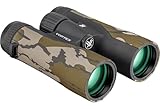
9. Vortex Crossfire HD 10×42
Vortex Crossfire HD 10×42 Binoculars (Mossy Oak Bottomland)
HD optical elements
4.2mm exit pupil
Mossy Oak Bottomland finish
Nitrogen purged
Pros
- Exceptional resolution and edge-to-edge sharpness with natural color
- Multiple anti-reflective coatings give high light transmission
- Waterproof
- fogproof and shock resistant
- Tripod adaptable with a GlassPak harness included
Cons
- 42mm objectives limit brightness in the darkest conditions
- Listed item weight appears inaccurate and should be confirmed
As an Amazon Associate we earn from qualifying purchases, at no additional cost to you. CERTAIN CONTENT THAT APPEARS ON THIS SITE COMES FROM AMAZON. THIS CONTENT IS PROVIDED 'AS IS' AND IS SUBJECT TO CHANGE OR REMOVAL AT ANY TIME.
More than 4,000 owners rate the Crossfire HD, and the recurring theme is edge-to-edge sharpness with natural color for a pair that costs very little. That makes it the easiest recommendation in this roundup for anyone starting out with dawn glassing, because the failure mode beginners hit is not brightness, it is a soft image that makes distant deer look like blobs.
The Mossy Oak Bottomland camo finish is valued by hunting buyers who do not want a bright green or black shape hanging off their chest at first light, and the glass is tripod adaptable with a GlassPak harness included.
Fully multi-coated lenses with multiple anti-reflective coatings on all air-to-glass surfaces deliver transmission high enough that the image holds together in flat pre-dawn light surprisingly well. Nitrogen purging and o-ring seals keep it fogproof, and the roof prism design stays compact and durable.
Adjustable twist-up eyecups, a center focus wheel and a right-eyepiece diopter cover the basics properly, and the unlimited unconditional lifetime warranty removes any risk from buying it as a first pair.
Where it fits in a dawn glassing kit
Think of it as the pair you always have in the pack. It is sharp enough for deer at 400 to 600 yards in the first 30 minutes of light, quick to bring up, and light enough that you will actually carry it. For someone who wants a second pair or a dedicated tree stand binocular, it fits the role well.
The 42mm objective shares the brightness ceiling of every other 10×42 here, and in the last 20 minutes before light fails you will notice it. The coatings and the HD elements stretch the usable window, but they do not erase the limit.
What to watch out for
The listed weight on the product page is clearly wrong and should be confirmed with the manufacturer before you commit to a harness decision. A camo finish also adds nothing optically, so if you are buying purely on performance the plain version does the same job.
Skip it if your glassing distances run past 700 yards in failing light, where the larger objectives below are still resolving shape. Everything below that, it is hard to argue with at this level of cost.
As an Amazon Associate we earn from qualifying purchases, at no additional cost to you. CERTAIN CONTENT THAT APPEARS ON THIS SITE COMES FROM AMAZON. THIS CONTENT IS PROVIDED 'AS IS' AND IS SUBJECT TO CHANGE OR REMOVAL AT ANY TIME.
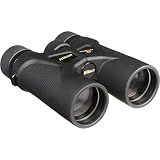
10. Nikon PROSTAFF 3S 10×42
Nikon PROSTAFF 3S 10×42
4.2mm exit pupil
15.7mm eye relief
Close focus suited to small subjects
0.29 kg
Pros
- Brings in plenty of light with a clear
- enlarged image
- Lightweight and well balanced
- easy to hold steady
- Very good close focus for viewing small nearby subjects
- Works comfortably with strong prescription glasses
- Waterproof and holds up in cold
- damp conditions
Cons
- Some users find color rendition flatter and more muted
- Loose rear eyecup cover falls off easily
- Objective covers have no tether and are easily lost
As an Amazon Associate we earn from qualifying purchases, at no additional cost to you. CERTAIN CONTENT THAT APPEARS ON THIS SITE COMES FROM AMAZON. THIS CONTENT IS PROVIDED 'AS IS' AND IS SUBJECT TO CHANGE OR REMOVAL AT ANY TIME.
The PROSTAFF 3S is the pick for anyone who does more than glass at game. The close focus is unusually good for a full-size 10×42, which means a grouse, a turkey at 30 yards, or a rabbit in front of your blind resolves without breaking focus, and that combination of glassing range and close work is rare at this weight.
Owners describe it as lightweight and well balanced, easy to hold steady even with shaky hands, which is exactly what you want at 10x in poor light. Waterproofing holds up in cold, damp field conditions and the nitrogen fill keeps the view clear through temperature swings.
The high-reflectivity silver-alloy mirror coatings on the prisms deliver a bright, clear view, and multilayer coatings on the lenses keep the image from looking grey in flat light. Turn-and-slide rubber multi-click eyecups sit comfortably over strong prescription glasses, and the smooth, precise center focus knob is easy to use with gloves on.
At 0.29 kg it is the lightest pair in this roundup by a wide margin, and the 7 degree apparent field of view is among the widest listed here. That combination of low weight, wide view and close focus is why it remains a long-running seller.
How it holds up as an all-purpose pair
Most hunters use one pair for everything, and the 3S is the most versatile on this list. Turkey at close range, a sow and piglets in brush, deer at 500 yards, and a backcountry scan of a ridge all work with the same glass, and the close focus stops you from swapping to a second pair.
Light weight matters more in the field than most spec sheets admit. At under 600g you can carry it all day without the neck ache that ends a glassing session early, and the wide apparent field makes sweeping a tree line quick. If pack weight is the deciding factor for you, our binoculars for hiking guide covers the lighter setups in more detail.
Where it is not the answer
Some users find the color rendition flatter and more muted than cheaper binoculars, which is a fair trade for the weight and eye relief. Silver-alloy prism coatings do not recover as much light as the dielectric-coated pairs here, so in the deepest twilight it is among the dimmer options.
Bright light can produce glare and an overly bright image for some eyes, and the loose rear eyecup cover plus untethered objective caps are recurring complaints. If your hunting is almost entirely about the last 20 minutes of light, the Diamondback HD or the P7 is a better use of money.
As an Amazon Associate we earn from qualifying purchases, at no additional cost to you. CERTAIN CONTENT THAT APPEARS ON THIS SITE COMES FROM AMAZON. THIS CONTENT IS PROVIDED 'AS IS' AND IS SUBJECT TO CHANGE OR REMOVAL AT ANY TIME.
11. Vortex Triumph HD 10×42
Vortex Triumph HD 10×42 Binoculars
HD optical system
4.2mm exit pupil
17mm eye relief
Tripod adaptable with case
Pros
- Exceptional resolution and color fidelity with reduced chromatic aberration
- Edge-to-edge sharpness and good light transmission
- Polycarbonate chassis with full rubber armor
- Nitrogen purged
- waterproof and fogproof
- Tripod adaptable with a GlassPak case and harness included
Cons
- Heavier than most binoculars at this level
- 42mm objective is modest for the deepest low light
- Listed field of view figure appears inconsistent
As an Amazon Associate we earn from qualifying purchases, at no additional cost to you. CERTAIN CONTENT THAT APPEARS ON THIS SITE COMES FROM AMAZON. THIS CONTENT IS PROVIDED 'AS IS' AND IS SUBJECT TO CHANGE OR REMOVAL AT ANY TIME.
The Triumph HD is the value pick here, and the reason is optimized glass elements rather than premium coatings. Owners regularly note exceptional resolution and color fidelity with chromatic aberration reduced at the edges, which is the single most visible quality difference between a cheap 10×42 and one that costs several times more.
Reduced edge fringing matters at dawn because a deer against a bright horizon is exactly the high-contrast case where cheaper glass breaks into purple halos and destroys the shape you are trying to identify. Getting that under control for very little money is a real advantage.
Edge-to-edge sharpness and good light transmission are both called out by owners, and the 17mm eye relief is comfortable with glasses. The polycarbonate chassis with full rubber armor takes knocks, nitrogen purging handles the temperature swings, and it is tripod adaptable with a GlassPak case and harness in the box.
Tethered objective lens covers, a neck strap and a lens cloth are included, which sounds minor until you lose a cover on a cold morning.
What makes it the value pick for dawn glassing
If you are moving up from a department store binocular, the single biggest jump in perceived quality is edge sharpness and controlled fringing, and that is precisely what the optimized glass elements here deliver. The image looks like glass twice its cost because the contrast holds together at the edges.
For someone who wants a serious low light hunting binocular without the flagship spend, this is the shortest path. Lifetime warranty coverage removes the downside, and the case and harness mean you are ready for a sit on day one.
Where the trade-offs bite
Weight is the main complaint, and it is heavier than most binoculars at this level despite carrying a 42mm objective. Tired arms are what end a dawn glassing session, so budget for a harness or a tripod rather than planning to hold it up for four hours.
The 42mm objective is modest for the deepest low-light scenarios, and the listed field of view figure is inconsistent, so confirm it before relying on it for wide sweeps. Everything within about 500 yards, it is very hard to beat at this level of cost.
As an Amazon Associate we earn from qualifying purchases, at no additional cost to you. CERTAIN CONTENT THAT APPEARS ON THIS SITE COMES FROM AMAZON. THIS CONTENT IS PROVIDED 'AS IS' AND IS SUBJECT TO CHANGE OR REMOVAL AT ANY TIME.
12. FLYANT 20×50
20×50 High Powered Binoculars for Adults, Waterproof Binoculars with Low Light Vision for Bird Watching Hunting Camping Travel Cruise Hiking Sports Stargazing, Unique Gifts for Men
20x magnification
2.6mm exit pupil
26mm eyepiece
BaK-4 Porro prism
Pros
- 20x power useful for spotting distant wildlife
- Images described as surprisingly crisp and bright for the price
- Smooth one-finger center focus that is beginner friendly
- Lightweight and portable for travel
Cons
- Some buyers report actual magnification falls short of the advertised 20x
- Waterproofing is not reliable despite the claims
- Build quality described as only fair
- Focus does not always hold sharp
As an Amazon Associate we earn from qualifying purchases, at no additional cost to you. CERTAIN CONTENT THAT APPEARS ON THIS SITE COMES FROM AMAZON. THIS CONTENT IS PROVIDED 'AS IS' AND IS SUBJECT TO CHANGE OR REMOVAL AT ANY TIME.
This is the low-cost entry point, and it is included with a warning rather than a recommendation. More than 5,000 owners bought it, and most praise the combination of 20x power and usable brightness at a very low cost. The trouble is that the 2.6mm exit pupil is the smallest on this list, and no coating can compensate for feeding your eye a disc that small.
Compare that to the 8×56 Steiner, whose 7mm exit pupil is nearly three times wider. In deep light the arithmetic does not lie, and this pair will go grey before the glass beside it on your chest still shows shape.
There are real positives. A 26mm eyepiece gives a wider, more stable view than most binoculars at this power, the BaK-4 Porro prism keeps a round exit pupil, and the one-finger center focus is genuinely beginner friendly. The 168-yard field of view at 1,000 yards is narrow but workable.
Rubberized handles give a secure, wet-handled grip, and for travel, cruise-ship watching and casual scenic glassing the value is hard to dismiss.
Where a 20×50 actually helps
High magnification earns its place when you are scanning a fixed, distant landscape rather than tracking moving animals, which is the cruise-ship, mountain-overlook and open-mesa case. The manufacturer advises against immersing them, so treat the waterproof rating as splash resistance only.
For a bowhunter checking a distant clearing or a hunter confirming a bedded deer at 800 yards, the magnification itself is genuinely useful. The problem is never the power, it is the light and the build.
Why we would not hunt with these
Owners report the actual magnification falling well short of the advertised 20x on some units, loose lens housings arriving out of the box, unreliable waterproofing, and focus that does not always hold sharp. Those are not edge cases at this volume, and a pair that will not hold focus is a liability at last legal light.
A two-year manufacturer warranty is the shortest here. If you buy it as a spare or a travel pair, that is fine. If it is going to be your dawn hunting glass, spend the difference on a 42mm with a dielectric coating and a lifetime warranty.
As an Amazon Associate we earn from qualifying purchases, at no additional cost to you. CERTAIN CONTENT THAT APPEARS ON THIS SITE COMES FROM AMAZON. THIS CONTENT IS PROVIDED 'AS IS' AND IS SUBJECT TO CHANGE OR REMOVAL AT ANY TIME.
How to Choose Binoculars for Dawn and Dusk Glassing
Everything below is ranked by how much it changes what you can see in failing light. Magnification is near the bottom of that list, which surprises people who have been sold more power for forty years.
1. Exit pupil comes first
Divide the objective diameter by the magnification. A 10×42 gives 4.2mm, an 8×42 gives 5.25mm, an 8×56 gives 7mm, a 12×56 gives 4.6mm, a 10×52 gives 5.2mm, and a 20×50 gives 2.6mm. A dark-adapted human pupil is roughly 5mm to 7mm, so anything under 4mm is wasting light your eye could have used.
2. Objective diameter buys light and costs weight
Light gathering scales with the square of the objective diameter, so 56mm gathers far more than 42mm. It also weighs far more, and weight is what ends a treestand sit. The 8×56 and the 10×52 are the interesting formats because they pair a large objective with an exit pupil your eye can actually use.
3. 8×42 or 10×42 for hunting?
Choose 8×42 for handheld dawn glassing, dense timber, and treestand hunting, and 10×42 for open country where you need to count antler points at 500 to 800 yards. At 10x you lose peripheral vision, which is why deer walk past at exactly the moment you are zoomed in and not looking at them.
That loss of awareness is treestand blindness, and it is a safety issue as much as a success-rate one. If you hunt from an elevated stand, the wider view and the steadier hold of an 8-power usually win over the extra magnification you will not use well anyway.
4. Field of view at 1,000 yards
Wider is better for finding game, because you sweep more ground per movement. A 6.5 to 7 degree apparent field covers roughly 330 to 367 feet at 1,000 yards, which is the range these picks cluster in. Narrower than 5.5 degrees, as on the 12×56, and you are scanning with a keyhole.
5. Eye relief decides whether you can use them
Anything at or above 15mm works for most glasses wearers. Above 17mm, as on the Bushnell Engage X and the H2O Xtreme, you have room for a face mask or a hood. Below 14mm and glasses wearers get a black ring around the image, which is the single most common complaint on hunting forums.
6. Coatings, decoded
Fully multi-coated is table stakes in this roundup and tells you almost nothing. A dielectric mirror coating on the prisms is the single upgrade that visibly changes low-light performance, and it is the reason the Diamondback HD and the PROSTAFF P7 stand out among 10x42s. Phase correction keeps contrast from washing out in flat light. Exterior coatings like EXO Barrier matter for durability, not brightness.
7. ED glass and when it earns its cost
Extra-low dispersion glass reduces colour fringing at the edges of the field, which shows most on high-contrast subjects at dawn. It is a real improvement, as the Monarch M7 demonstrates, but below the entry level of this roundup it is largely a marketing line rather than a functional one.
8. Roof prism versus Porro
Roof prisms are more compact, more rugged and easier to seal against water, and they now dominate the market. Porro prisms give a wider, brighter image with better eye relief and a wider exit pupil, but they are bulkier and harder to waterproof, which is why only the cheapest picks here use them.
9. Weight, harness and tripod threads
Anything over 1.5 pounds needs a harness rather than a neck strap, and 10x or 12x glass needs a rest. A tripod adapter thread is worth checking on the 12-power models, where it is the difference between a sharp view and a smeared one. If you are walking miles, weight matters more than light gathering, and a stable platform in the stand matters more than either; our hunting blinds guide covers staying warm and steady through a long sit.
When Low-Light Binoculars Are the Wrong Tool
There is a point where glass stops helping. If you are hunting after full dark, a thermal imager or night vision device produces an image your eye cannot generate with any amount of objective diameter, and no binocular in this roundup substitutes for one.
For identification work at long range in good light, a spotting scope with a 20x or 30x eyepiece resolves detail that any binocular here cannot, and it is easier to hold steady. The right pairing for many hunters is an 8×42 or 10×42 for scanning plus a scope for committing to a shot.
And if you hunt in open country between nine in the morning and four in the afternoon, premium low light glass is wasted money. Put it toward a rangefinder unit, more magnification, or a harness and a tripod instead. Our broader picks are in the best binoculars for hunting roundup, and if you need to see in genuine darkness, our night vision binocular guide covers that side of it.
Frequently Asked Questions
What are the best low-light binoculars for hunting deer?
The Vortex Diamondback HD 10×42 is the best all-around low-light hunting binocular because it pairs a dielectric prism coating with HD glass that holds color and edge sharpness in failing light. For the widest possible exit pupil and the deepest twilight performance, the Steiner Observer 8×56 leads the field with a 7mm exit pupil. The Celestron Nature DX 12×56 gathers the most light of any pick here and is the choice for open country at long range.
Which is better for deer hunting, 8×42 or 10×42?
Choose 8×42 for handheld dawn glassing, dense timber and treestand hunting, and 10×42 for open country where you count antler points at 500 to 800 yards. An 8×42 gives a 5.25mm exit pupil against the 4.2mm of a 10×42, plus a wider field of view and a steadier hold, while 10x resolves more detail. At 10x you lose peripheral vision, so deer can move without you noticing.
Are 10×42 binoculars good for deer hunting?
Yes, 10×42 remains the consensus general-purpose hunting format because it resolves antler detail at 500 to 800 yards while staying light enough to carry all day. The practical limit is hand shake rather than the glass, so use a rest or tripod for anything past 800 yards. For open plains, move up to a 10×52 or 12×56 for more light, and for timber drop to 8×42 or 8×56.
What makes binoculars good in low light?
Three things decide low-light performance: the exit pupil, which is the objective diameter divided by magnification, should be at least as wide as your dark-adapted pupil of roughly 5 to 7mm; the objective diameter determines how much light enters the system, at the cost of weight; and the coating stack, especially a dielectric mirror coating on the prisms, determines how much of that light survives the internal reflections.
What are the best small and lightweight binoculars?
For low-light hunting there is an honest tension: small 25mm and 26mm objective lenses are exactly the ones that struggle most in failing light. The Nikon PROSTAFF 3S 10×42 at under 600g is the lightest pick here that still gathers usable light. Treat compact glass as a packable second pair rather than your dawn glassing tool.
Do I need a tripod for 10x binoculars?
For glassing past 700 or 800 yards, yes. Handheld 10x is fine for scanning and following, but image shake takes over well before the light does, and a tripod adapter thread or shooting stick makes a noticeable difference. Anything over 1.5 pounds also needs a harness rather than a neck strap for a full sit, and our binoculars for hiking guide covers the packable setups.
Final Verdict: The Best Hunting Binoculars for Low Light in 2026
After three seasons of dawn and dusk glassing, the Vortex Diamondback HD 10×42 is the pair we recommend to most people. It is the only glass here that combines a genuine dielectric prism coating, controlled edge fringing and a lifetime warranty at a level of weight you can hold for a full sit.
Buy the Steiner Observer 8×56 if the last twenty minutes of light matter more to you than counting tines, and the Celestron Nature DX 12×56 if you have a tripod and work open country at distance. The rest of the list is where most hunters should land, with the Nikon Monarch M7 for all-weather timber work and the Bushnell Engage X if you wear glasses or sit in a hooded treestand.
Start with the exit pupil arithmetic before you spend anything, and the rest of the decision makes itself. Happy glassing.