

A dive computer is the first piece of life-support equipment a recreational diver should own, and it is also the piece most often rented, borrowed or bought in a hurry. We spent weeks going through the current crop of wrist and watch-sized computers, reading owner reports, and weighing how each one behaves in the situations recreational divers actually meet: dark water, cold hands, a small wrist, a long day on a liveaboard, or a first season of ten to twenty dives.
What we found is narrower than the marketing suggests. Almost every computer on the market will track a recreational air or nitrox profile correctly. The differences that matter come down to whether you can read the screen at 18 metres on a dull afternoon, whether the menus get in your way when you are managing a safety stop, whether the battery survives a two-week trip without a charging cable, and whether the log still opens on your laptop five years from now.
That is the standard behind our list of the best dive computers for recreational divers in 2026. Every pick below runs an air and nitrox algorithm, logs to an app or desktop software, and has enough owner feedback to judge honestly. We have also flagged the models where the compromises are real, so you can decide whether a cheaper watch or a more capable one fits your diving better.
One safety note before we start. A dive computer is a planning and monitoring tool, not a substitute for training, and no algorithm can make an unsafe dive safe. Treat yours as a second opinion that happens to be very good at arithmetic, and carry a pressure gauge and a back-up timing source as part of a normal redundancy plan.
Table of Contents
- Top 3 Picks for Best Dive Computers for Recreational Diver (October 2026)
- All 10 Best Dive Computers for Recreational Diver in 2026
- 1. Shearwater Peregrine – Best Overall Dive Computer for Recreational Divers
- 2. Cressi Leonardo 2.0 G2 – Best Low-Cost Dive Computer
- 3. Cressi Donatello – Easiest Dive Computer for a New Diver
- 4. Garmin Descent Mk2i – Best Dive Computer with Wireless Air Integration
- 5. Cressi Raffaello – Best Dive Computer with a Compass and a Four Year Battery
- 6. Garmin Descent G2 – Best Dive Computer for Small Wrists
- 7. Suunto D5 – Best Dive Computer with Vibration Alerts
- 8. Garmin Descent G1 Solar – Best Dive Computer for Battery Endurance
- 9. Shearwater Teric – Best Dive Computer for Advancing Recreational Divers
- 10. Suunto Ocean – Best Dive Computer with GPS and Route Tracking
- How We Picked These Dive Computers
- What a Recreational Diver Actually Needs From a Dive Computer
- Battery Life, Charging and Travel Logistics
- Features You Do Not Need Yet
- Frequently Asked Questions
- What is the best dive computer for recreational diving?
- Is Shearwater the best dive computer?
- Which dive computer is the easiest for beginners to read?
- Which dive computer is best for daily use?
- Do you still need dive tables if you have a computer?
- How long do dive computers last?
- Should I buy a used dive computer?
- Can I wear a dive computer as a daily watch?
- Final Verdict
Top 3 Picks for Best Dive Computers for Recreational Diver (October 2026)
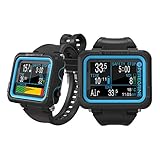
Shearwater Peregrine
- Full colour 2.2 inch LCD
- Two-button stainless steel control
- Up to 30 hours per charge
- Bluetooth log and cloud backup

Garmin Descent Mk2i
- SubWave tank pressure and gas time
- 1.4 inch colour sunlight-readable screen
- Up to 80 hours in dive mode
- Multisport training and music

Cressi Donatello
- Single-button underwater control
- Air nitrox gauge and freedive modes
- User-selectable deep stops
- Bluetooth and IR log transfer
As an Amazon Associate we earn from qualifying purchases. CERTAIN CONTENT THAT APPEARS ON THIS SITE COMES FROM AMAZON. THIS CONTENT IS PROVIDED 'AS IS' AND IS SUBJECT TO CHANGE OR REMOVAL AT ANY TIME.
Our top three cover the three genuinely different jobs. The Shearwater Peregrine is the one we hand to a diver who wants one computer and does not want to think about it again. The Garmin Descent Mk2i is for anyone who wants tank pressure on the wrist and also wants a training watch. The Cressi Donatello is the pick for a diver in their first season who will get more use from a simple, forgiving, one-button watch than from a dense colour display.
If you want the full picture before committing, read the individual reviews first. If you are short on time, the table below gives you every model in one pass.
All 10 Best Dive Computers for Recreational Diver in 2026
| Product | Key Features | Action |
|---|---|---|
|
Shearwater Peregrine
|
|
Check Latest Price |
 Cressi Leonardo 2.0 G2
|
|
Check Latest Price |
|
Cressi Donatello
|
|
Check Latest Price |
|
Garmin Descent Mk2i
|
|
Check Latest Price |
 Cressi Raffaello
|
|
Check Latest Price |
 Garmin Descent G2
|
|
Check Latest Price |
 Suunto D5
|
|
Check Latest Price |
 Garmin Descent G1 Solar
|
|
Check Latest Price |
 Shearwater Teric
|
|
Check Latest Price |
 Suunto Ocean
|
|
Check Latest Price |
As an Amazon Associate we earn from qualifying purchases, at no additional cost to you. CERTAIN CONTENT THAT APPEARS ON THIS SITE COMES FROM AMAZON. THIS CONTENT IS PROVIDED 'AS IS' AND IS SUBJECT TO CHANGE OR REMOVAL AT ANY TIME.
Two things stand out when the ten are laid out side by side. The first is the split between button-driven watches and touchscreen multisport watches, which changes what the computer feels like under a wetsuit cuff. The second is battery strategy: several picks here run a user-replaceable battery that you can swap on a liveaboard, while the rest need a cable or a dock.
1. Shearwater Peregrine – Best Overall Dive Computer for Recreational Divers
Shearwater Research Peregrine Dive Computer
Colour 2.2 inch LCD
Stainless two-button control
122 g
About 30 hours per charge
Pros
- Large colour screen that reads clearly underwater
- Very easy state-aware two-button menu
- Long battery life for multi-day trips
- Bluetooth logging with cloud backup
- Long band fits over a wetsuit cuff
Cons
- No air integration on this model
- No digital compass
- Display surface scratches easily
As an Amazon Associate we earn from qualifying purchases, at no additional cost to you. CERTAIN CONTENT THAT APPEARS ON THIS SITE COMES FROM AMAZON. THIS CONTENT IS PROVIDED 'AS IS' AND IS SUBJECT TO CHANGE OR REMOVAL AT ANY TIME.
The Peregrine has become the answer that keeps coming back in diving forums, and after working through the owner reports we understand why. r/diving threads regularly pair it with the Suunto Ocean as the two names worth owning, and the consensus is that Shearwater hardware holds its value when you eventually trade up. That reputation is not a spec sheet, but it matters for anyone who plans to keep a computer for a decade.
What sells the Peregrine day to day is the display. At 2.2 inches with full colour, the remaining bottom time and depth read at a glance without you having to hold the arm close to the mask. Reviewers describe the two-button stainless interface as genuinely simple, with menus that only show the options relevant to the current state, which removes most of the menu anxiety that puts beginners off colour computers.
Battery life is the quiet strength. Owners report logging more than ten hours of dive time across three days on a single charge, which matches the roughly 30 hours per charge the manufacturer quotes at medium brightness. The charging station is a wireless USB dock rather than a bare cable, so it occupies a little more desk space than a coin-cell computer, but it also means you are not hunting for a proprietary lead at 5am on a boat day.
The algorithm side covers recreational diving properly. NDL planning and a decompression planner are both built in, and nitrox up to 40 percent is handled natively. The rechargeable design also sidesteps a perennial forum complaint about older wrist computers: sealing a battery compartment underwater, and the seal failing a season later.
Readability and setup for a first-season diver
Colour screens often look like a step up and behave like a step down when a beginner tries to change a setting while holding a regulator in the other hand. The Peregrine avoids that with a two-button layout that is navigable with cold hands and thick gloves. Setting the nitrox mix is three presses away, and the confirmation screens are plain language rather than abbreviations.
The trade-off is that you are not getting a watch you will wear to the supermarket with quite the same ease as a dedicated smartwatch. It is a dive computer first, and a wrist-sized unit rather than a true watch case. If daily wear matters to you, look at the Garmin or Suunto multisport models further down this list.
Where the Peregrine falls short
There is no air integration and no digital compass on this model, so tank pressure comes from your own gauge and navigation comes from your compass. That is a completely workable recreational setup, and plenty of divers prefer to keep the two jobs separate. If you want gas time remaining on the wrist, you need the Peregrine TX or one of the air-integrated picks here.
The other recurring caution is the display surface. Owners report scratching, and a screen protector is sensible from day one. The rechargeable pack is also a sealed unit, which is convenient for reliability but means you are dependent on the brand for battery service over a long ownership period.
As an Amazon Associate we earn from qualifying purchases, at no additional cost to you. CERTAIN CONTENT THAT APPEARS ON THIS SITE COMES FROM AMAZON. THIS CONTENT IS PROVIDED 'AS IS' AND IS SUBJECT TO CHANGE OR REMOVAL AT ANY TIME.
2. Cressi Leonardo 2.0 G2 – Best Low-Cost Dive Computer
CRESSI Leonardo 2.0 G2 Dive Watch, One-Button Air Nitrox Gauge, White/Black
Monochrome LCD
Air nitrox and gauge modes
200 g
Single-button interface
Pros
- Lowest entry cost in this roundup
- One-button operation is simple to learn
- Audible and visual critical alerts
- USB and infrared log transfer to phone
Cons
- Small monochrome screen is harder to read in low light
- Plastic case and silicone band feel basic
- One-button menus take practice for deeper settings
As an Amazon Associate we earn from qualifying purchases, at no additional cost to you. CERTAIN CONTENT THAT APPEARS ON THIS SITE COMES FROM AMAZON. THIS CONTENT IS PROVIDED 'AS IS' AND IS SUBJECT TO CHANGE OR REMOVAL AT ANY TIME.
The Leonardo 2.0 G2 is the computer we would suggest to a diver who is not sure they will still be diving next year, and it also works as a cheap backup for someone who already owns a colour unit. It has by far the largest review base in this group, which means its strengths and its limits are well documented rather than guessed at.
Operation is a single button, and the menu structure is short enough to hold in your head. Air, nitrox and gauge modes are all there, and the alarm set covers the things that matter at recreational depth: exceeding the no-decompression limit, ascent rate, and a low battery warning with both a visual and an audible signal.
Log transfer works over USB and infrared, and the app reads on both iOS and Android. For a diver who dives 15 times a year and does not care about detailed profiles, that is a perfectly adequate logging setup, and it removes the main excuse people give for never logging at all.
What you give up is screen real estate. The display is a small monochrome LCD, and divers report that it is noticeably harder to read in low light or green water than a colour screen. Reviewers also describe the segmented on-screen abbreviations as taking a few dives to decode, which is exactly the kind of small friction that bothers a new diver.
Good choice if your diving is sporadic
If you dive locally, in good conditions, and your season is a handful of trips rather than a weekly commitment, this watch earns its place. It is large at 200 g, which suits a wrist that can carry a chunky unit, and the silicone strap handles a wetsuit cuff without complaint.
It is also the model we would put in a bag as a backup for a trip where the primary unit is a rental or a new computer you have not yet trusted. A cheap second opinion is a reasonable thing to own.
Where the Leonardo 2.0 G2 falls short
The plastic case and strap feel a step below the stainless models, and the screen is the weak point in any visibility challenge. There is no Bluetooth wireless pairing for a phone app in the same way the colour watches handle it, so log downloads take a cable or an infrared line of sight.
It is also worth being honest that the specification sheet lists a shallow water resistance figure alongside an IPX8 rating, and the listed battery life of 70 hours is a real-world figure rather than a stand-by claim. For recreational depth and ordinary service intervals that works, but it is not the watch to take on a multi-week liveaboard without a plan.
As an Amazon Associate we earn from qualifying purchases, at no additional cost to you. CERTAIN CONTENT THAT APPEARS ON THIS SITE COMES FROM AMAZON. THIS CONTENT IS PROVIDED 'AS IS' AND IS SUBJECT TO CHANGE OR REMOVAL AT ANY TIME.
3. Cressi Donatello – Easiest Dive Computer for a New Diver
Cressi Donatello Scuba Dive Computer, Single-Button Interface, Black/Silver
High-contrast LCD
Scuba gauge and freedive modes
129 g
150 m rated
Pros
- Very easy to learn from the first dive
- High-contrast display reads well underwater
- Air nitrox gauge and freedive modes
- Bluetooth and IR log transfer
- Strong owner satisfaction at 4.4 stars
Cons
- No air integration
- Tank pressure must be read separately
- Not aimed at mixed-gas or technical diving
As an Amazon Associate we earn from qualifying purchases, at no additional cost to you. CERTAIN CONTENT THAT APPEARS ON THIS SITE COMES FROM AMAZON. THIS CONTENT IS PROVIDED 'AS IS' AND IS SUBJECT TO CHANGE OR REMOVAL AT ANY TIME.
The Donatello is the watch we would hand to someone a few weeks into their certification. It covers scuba, gauge and freedive modes, and the owner reports are unusually warm for an entry-level computer, with divers who dive about twenty times a year describing it as simple, reliable and good value. Several note that it performed better for them than far more expensive smartwatches they had tried.
Readability is the standout. The high-contrast display stays legible in poor conditions, which matters more than most spec sheets admit. The 129 g weight sits comfortably on a smaller wrist than a 200 g watch, and the single-button control means you can change a setting with a glove on.
You can set your own deep stops for ascent planning, which is a nice touch for a beginner who is starting to think about how a profile works rather than just following a number. Logging goes over Bluetooth and infrared to the Cressi app, and the watch is rated to 150 metres, deeper than anything a recreational diver will reach.
That rating also means the dive modes cover the practical range: air, nitrox, gauge, freedive, plus a no-fly timer after the dive. It is a complete recreational package rather than a stripped-down entry model.
Why beginners get on with it faster
The learning curve is the main thing a new diver notices. There is one button, the screens are few, and the abbreviations are limited compared with a colour display. Divers report borrowing it for buddies who had not yet learned their own computer, which is about as strong a usability signal as a review can give.
Bluetooth logging is a real advantage over older budget watches, and the companion app works on PC, Mac and phone. For a diver whose previous logging was a notebook, that is a meaningful upgrade.
Where the Donatello falls short
There is no air integration, so tank pressure still comes from an analogue gauge on the first stage. That is a safety-positive arrangement in some ways, since the watch cannot be the only pressure reference, but it is a compromise for divers used to gas time on the wrist.
There is one isolated long-term report of moisture ingress under the bezel after about a year. A single report is not a pattern, but it is worth having the battery compartment checked if you buy one second hand. The watch is also not built for mixed-gas or technical work, which is the correct trade for a recreational budget.
As an Amazon Associate we earn from qualifying purchases, at no additional cost to you. CERTAIN CONTENT THAT APPEARS ON THIS SITE COMES FROM AMAZON. THIS CONTENT IS PROVIDED 'AS IS' AND IS SUBJECT TO CHANGE OR REMOVAL AT ANY TIME.
4. Garmin Descent Mk2i – Best Dive Computer with Wireless Air Integration
Garmin Descent Mk2i, Watch-Style Dive Computer with Air Integration, Multisport Training/Smart Features, Titanium with Black Band
1.4 inch colour LCD
Titanium case
SubWave air integration
80 hours in dive mode
Pros
- SubWave shows tank pressure and gas time
- Large sunlight-readable colour display
- 80 hour dive battery suits liveaboards
- Multisport training music and smart notifications
- Stores 200 dives on the wrist
Cons
- Descent T1 transmitter sold separately
- GPS does not function underwater
- Touchscreen menus need practice
- Bulkier than slim wrist computers
As an Amazon Associate we earn from qualifying purchases, at no additional cost to you. CERTAIN CONTENT THAT APPEARS ON THIS SITE COMES FROM AMAZON. THIS CONTENT IS PROVIDED 'AS IS' AND IS SUBJECT TO CHANGE OR REMOVAL AT ANY TIME.
Air integration is the feature recreational divers ask about most, and the Mk2i is the clearest version of it. The optional Descent T1 transmitter pairs over Garmin’s SubWave network, shows remaining tank pressure and calculates gas time from your consumption rate, and can track up to five tanks on one watch. Owners using it with a rental regulator report that the connection is stable once paired, and the data simply stops appearing if the link drops rather than giving you a wrong number.
The display is one of the largest here at 1.4 inches, colour and sunlight-readable, with 36 percent more screen area than the previous generation. It is readable in a bright shallow reef and in a dark inlet without changing a setting, which is the test that matters.
Battery life is 80 hours in dive mode, and that number is the practical reason to choose this watch for a week on a boat. It also runs for days as a smartwatch with all-day heart rate, and 15 hours in GPS mode with music. Long-term owner satisfaction is high, and one diver on r/scubadiving described having logged 214 dives on the previous version and called it an amazing dive computer.
Beyond diving it is a full multisport watch: wrist heart rate, Pulse Ox, a compass, 32 GB of storage for music, smart notifications, contactless payment and Connect IQ apps. If you train, this is the one device that replaces both a dive computer and a sports watch.
Who gets the most from it
A diver who takes 40 or more dives a year and owns their own regulator can pair once and forget about the transmitter for the rest of the season. It is also the natural pick for someone who already wears a fitness watch and would rather not wear two things on a boat deck.
GPS surface navigation and surface entry and exit marking are useful when you are dropping a boat on a reef you have not dived before, and the 200-dive onboard log means a full trip fits on the watch without a cable.
Where the Mk2i falls short
The transmitter is a separate purchase, so the real cost is the watch plus the pod. GPS does not function underwater, which is normal but worth stating plainly, and the menu system is touch-driven, which means a learning curve that button-only watches do not have.
It is also a big watch. On a small wrist it sits proud, and over a wetsuit cuff it is noticeable. The warranty is one year, shorter than the two years offered on several of the wrist computers in this list, which is worth factoring into a long ownership plan.
As an Amazon Associate we earn from qualifying purchases, at no additional cost to you. CERTAIN CONTENT THAT APPEARS ON THIS SITE COMES FROM AMAZON. THIS CONTENT IS PROVIDED 'AS IS' AND IS SUBJECT TO CHANGE OR REMOVAL AT ANY TIME.
5. Cressi Raffaello – Best Dive Computer with a Compass and a Four Year Battery
Cressi Raffaello Dive Computer, Built-in Digital Compass, Black/Blue
Backlit LCD
Built-in compass
Four year replaceable battery
120 g
Pros
- Integrated compass is rare at this level
- Very large backlit display reads well underwater
- Three nitrox mixes switchable underwater
- Four year replaceable battery removes charging downtime
- Slim case sits under a wetsuit cuff
Cons
- Menus take practice to learn
- Bluetooth transfer needs a separate Cressi module
- Non-graphic screen cannot show a dive profile
- Very long strap with a single keeper loop
As an Amazon Associate we earn from qualifying purchases, at no additional cost to you. CERTAIN CONTENT THAT APPEARS ON THIS SITE COMES FROM AMAZON. THIS CONTENT IS PROVIDED 'AS IS' AND IS SUBJECT TO CHANGE OR REMOVAL AT ANY TIME.
The Raffaello solves two problems at once that other watches solve separately. It has a built-in digital compass, which owners report tracks closely against an analogue compass in real use, and it runs a user-replaceable battery with an expected life of about four years. For a diver who does not want a charging routine in the middle of a trip, that combination is rare.
The display is large, backlit and high contrast, and it stays legible underwater even in bright conditions. At 120 g the case is slim enough to disappear under a sleeve, which is a small quality-of-life difference that a long boat day makes obvious.
You get four modes, air, nitrox, gauge and apnea, and the RGBM-based planning can hold up to three nitrox mixes that you can switch between underwater. That is more than most recreational divers need, but it is the kind of headroom that means the watch will not feel dated if your certification and your dive sites get more ambitious.
Log transfer works over Bluetooth and USB. One catch that comes up repeatedly in reviews is that the Bluetooth side needs a separately purchased Cressi module, so check what is in the box rather than assuming wireless is included.
Best for divers who travel without a charging plan
If you are on a liveaboard, in a remote area, or simply tired of remembering a cable, a replaceable battery removes a whole category of planning. Swap the cell in a dive shop and the watch is ready for the next day, with no firmware prompts and no charging dock to lose.
The compass is the second reason to like it. A wrist compass is not a replacement for a proper compass or a nav computer, but it is a useful backup and it removes one more failure point in unfamiliar water.
Where the Raffaello falls short
The menu system is the main learning cost. Reviewers consistently describe it as less intuitive than a graphic display and as needing practice before it stops feeling fiddly. A non-graphic display also means there is no visual dive profile, so if reviewing your profile shape matters to you, this is the wrong shape of tool.
The strap is very long and has only one keeper loop, which is annoying over a bare wrist and fine under a wetsuit. Budget for a proper strap change early on.
As an Amazon Associate we earn from qualifying purchases, at no additional cost to you. CERTAIN CONTENT THAT APPEARS ON THIS SITE COMES FROM AMAZON. THIS CONTENT IS PROVIDED 'AS IS' AND IS SUBJECT TO CHANGE OR REMOVAL AT ANY TIME.
6. Garmin Descent G2 – Best Dive Computer for Small Wrists
Garmin Descent™ G2, Watch-Style Dive Computer, 46mm, Black
1.2 inch AMOLED sapphire
46 mm case
65 g
10 ATM dive rating
Pros
- AMOLED screen with sapphire lens is crisp and bright
- Compact 46 mm case fits smaller wrists
- Supports recreational advanced technical and freediving
- Up to 10 days of smartwatch battery
- Dive readiness metrics judge pre-dive fatigue
Cons
- 1.2 inch screen is small for some users
- 27 hours of dive battery needs a mid-trip charge
- No air integration without an extra transmitter
As an Amazon Associate we earn from qualifying purchases, at no additional cost to you. CERTAIN CONTENT THAT APPEARS ON THIS SITE COMES FROM AMAZON. THIS CONTENT IS PROVIDED 'AS IS' AND IS SUBJECT TO CHANGE OR REMOVAL AT ANY TIME.
Most watch-sized dive computers are designed around a 45 to 47 mm case and get larger from there. The G2 sits at 46 mm across but only 15.2 mm thick and 65 g, and owners with smaller wrists report that it sits properly rather than perched on the bone. If a watch has to be worn over a wetsuit cuff, that slimness is the difference between a tool and an annoyance.
The AMOLED display with a sapphire lens is the brightest and most vivid screen here, and the sapphire cover resists the scratches that colour LCDs pick up. Support covers recreational, advanced, technical, freediving and pool apnea, so it also serves as a speargunning and freediving watch.
The training side is genuinely deep. Multi-GNSS lets you mark a surface entry and exit point and find it again, and a dive readiness feature pulls sleep, stress, exercise and recent dives into a simple verdict about whether you are fresh. Several buyers use it as a backup computer alongside a larger primary unit, which is a sensible redundancy habit.
The housing, bezel and buttons are made from recycled ocean-bound plastics, and the rating is 10 ATM with leakproof buttons. It runs 4 GB of storage, 27 hours in dive mode, and up to 10 days as a smartwatch with the usual Garmin notifications, Garmin Pay and Connect IQ customisation.
Where it fits against the bigger Garmins
Against the larger Descent models, the G2 trades screen area and dive-mode battery for wrist comfort and daylight battery life. If your diving is two or three dives a day with a proper surface interval, 27 hours is ample. If you are planning a week of repeated back-to-back dives, recharge overnight and it is still workable.
For freedivers and spearfishers it is arguably the better watch, because the mode support and the slim case suit a surface interval spent waiting rather than diving.
Where the G2 falls short
The most common criticism is simply that 1.2 inches is small. One buyer returned a unit over the display size, and buyers with reduced eyesight should try one on before committing. It is the pick for small wrists, not for large ones.
There is no air integration without adding a Descent T1 transmitter. The one-year warranty is also shorter than several alternatives here.
As an Amazon Associate we earn from qualifying purchases, at no additional cost to you. CERTAIN CONTENT THAT APPEARS ON THIS SITE COMES FROM AMAZON. THIS CONTENT IS PROVIDED 'AS IS' AND IS SUBJECT TO CHANGE OR REMOVAL AT ANY TIME.
7. Suunto D5 – Best Dive Computer with Vibration Alerts
SUUNTO D5 Dive Computer, Color Display 100m Waterproof, All Black
Colour display
Digital compass
Three-button menu
0.15 kg
Pros
- Excellent readability on late afternoon dives
- Light for a colour screen wrist computer
- Vibration alerts are felt through a thin glove
- Three-button menu is quick to learn
- Bluetooth app gives detailed profiles and tank data
Cons
- Rechargeable battery far short of stated dive time
- Low battery banner can block the display
- Only two watch faces as standard
- Safety stop range is narrow
As an Amazon Associate we earn from qualifying purchases, at no additional cost to you. CERTAIN CONTENT THAT APPEARS ON THIS SITE COMES FROM AMAZON. THIS CONTENT IS PROVIDED 'AS IS' AND IS SUBJECT TO CHANGE OR REMOVAL AT ANY TIME.
The D5 is the model Suunto owners tend to keep for years, and the long-term reports are full of people who have dived with the brand since the 1980s. It is a light, colour-screen wrist computer at 0.15 kg, and reviewers single out readability on late-afternoon low-light dives as the thing that keeps them coming back.
The reason to look at it over other colour screens is the alert system. Vibration alarms for depth, dive time and ascent rate are genuinely noticeable through a thin glove, which matters when a unit sits under a thick drysuit cuff. Many divers simply switch vibration off on the surface, where the buzz on a boat deck is unwanted.
There is a digital compass, three-button navigation, scuba and freedive modes, and wireless support for a Suunto tank pod. The Bluetooth app is where the D5 justifies itself, because it produces detailed dive profiles with temperature and tank data, and the profile view is the feature that turns a log into something you learn from.
That makes the D5 a good companion to a training programme. It is also a well-understood watch if you have seen one before, since Suunto’s three-button layout has been stable for years.
Good for a diver who trains and watches their profiles
The Bluetooth log and profile review make this a sensible pick for someone taking a course, doing a Divemaster internship, or working towards a deeper qualification. Being able to see the shape of your own profile after each dive is how you learn to hold a shallower average depth.
For a diver who also wants a watch face for daily wear, there are two included out of the box, which is modest but adequate for surfacing on a boat and checking the time.
Where the D5 falls short
Battery life is the dominant complaint and it is not a small one. The stated dive time is up to 12 hours, but reviewers report far less in practice, and some get about four usable hours. If you plan three or four dives a day from one boat, that is a problem you will feel. A low battery banner can also sit across the display until cleared.
Two smaller gripes: the safety stop range is narrow enough that a drifting setting can cause the unit to pause, and some owners report the Mac desktop app crashing when opening an individual dive, so check your computer platform before you buy.
As an Amazon Associate we earn from qualifying purchases, at no additional cost to you. CERTAIN CONTENT THAT APPEARS ON THIS SITE COMES FROM AMAZON. THIS CONTENT IS PROVIDED 'AS IS' AND IS SUBJECT TO CHANGE OR REMOVAL AT ANY TIME.
8. Garmin Descent G1 Solar – Best Dive Computer for Battery Endurance
Descent™ G1 Solar, Rugged Dive Computer, Black
1.27 inch monochrome LCD
Solar charging lens
66 g
25 hours in dive mode
Pros
- Solar charging extends smartwatch battery to months
- Rugged 66 g case with glove-friendly buttons
- Supports recreational advanced technical and freediving
- Multi-GNSS marks surface entry and exit
- 30 plus sport apps with VO2 max
Cons
- 25 hours of dive mode is the shortest runtime here
- Monochrome screen is less vivid than AMOLED models
- Tight limit for multi-day boat diving without a recharge
As an Amazon Associate we earn from qualifying purchases, at no additional cost to you. CERTAIN CONTENT THAT APPEARS ON THIS SITE COMES FROM AMAZON. THIS CONTENT IS PROVIDED 'AS IS' AND IS SUBJECT TO CHANGE OR REMOVAL AT ANY TIME.
The G1 Solar is the no-fuss option in the Garmin line, and the solar lens is the reason to choose it over a similar-sized AMOLED watch. Owners report four months of smartwatch battery with regular sun exposure, which essentially retires charging as a daily task. The dive-mode figure of 25 hours is real but modest, so treat the solar benefit as an everyday-wear advantage rather than a dive-weekend one.
Controls are button-only in a rugged 66 g case, which owners with a preference for physical buttons describe as reliable and usable with gloves. It supports recreational, advanced, technical, freediving and spearfishing, so the dive mode coverage is broader than most recreational watches claim.
Multi-GNSS covers GPS, GLONASS and Galileo, letting you mark the boat entry point and find it again on the surface, which is genuinely useful on a drift dive in current. The log holds up to 200 dives on the wrist and uploads through the Garmin Dive app with a global dive site search.
The fitness side is substantial, with more than 30 sport apps, VO2 max, wrist heart rate, Pulse Ox, Body Battery and a sleep score. QuickFit bands mean you can swap straps in seconds without tools, which is a small quality-of-life win over screw-down systems.
Best as an everyday watch that also dives
If the computer has to earn its place on your wrist between dives, the G1 Solar is the pick in this roundup. Four months of smartwatch battery, a sunlight-friendly monochrome screen and glove-friendly buttons make it a watch you will not take off, which is what you want from a device you will want to bring on a spur-of-the-moment dive.
It also works well as a second computer. A cheap, durable backup that runs a different algorithm family from your primary unit adds real redundancy.
Where the G1 Solar falls short
Twenty-five hours in dive mode is a tight dive runtime, and it is the constraint that decides who should buy it. Two or three dives a day on a boat with an overnight recharge is fine. Three or four days of back-to-back diving without a cable is not.
The monochrome 176 x 176 display is also less vivid than the AMOLED models, so if readability is your top priority rather than battery life, look at the G2 or the Mk2i instead.
As an Amazon Associate we earn from qualifying purchases, at no additional cost to you. CERTAIN CONTENT THAT APPEARS ON THIS SITE COMES FROM AMAZON. THIS CONTENT IS PROVIDED 'AS IS' AND IS SUBJECT TO CHANGE OR REMOVAL AT ANY TIME.
9. Shearwater Teric – Best Dive Computer for Advancing Recreational Divers
Shearwater Research Teric Dive Computer – Black
Colour wrist watch display
Buhlmann ZHL-16c
40 g
Bluetooth and firmware upgrades
Pros
- ZHL-16c with adjustable gradient factors
- Nitrox trimix and fixed PO2 support
- Very light at 40 g and comfortable for long dives
- Switchable audible and vibration alerts
- Bluetooth logging with upgradeable firmware
Cons
- Menu system is dense and assumes deco knowledge
- Full colour touch operation needs care with cold hands
- Gas planning requires careful setup
As an Amazon Associate we earn from qualifying purchases, at no additional cost to you. CERTAIN CONTENT THAT APPEARS ON THIS SITE COMES FROM AMAZON. THIS CONTENT IS PROVIDED 'AS IS' AND IS SUBJECT TO CHANGE OR REMOVAL AT ANY TIME.
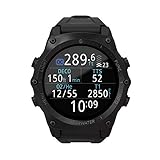
The Teric is among the most highly rated watches in this group, and the owner reports explain why: people who started on recreational air and nitrox and then wanted more control moved up to it. The Buhlmann ZHL-16c algorithm with configurable gradient factors lets you decide how conservative the computer is, which is the single feature that separates a recreational watch from a progression tool.
At 40 g it is the lightest thing here, and the 22 mm strap comes with an extender for a wetsuit cuff. The colour display, 316 stainless buttons and switchable audible plus vibration alerts are all well judged for real use, and Bluetooth logging with upgradeable firmware makes it a sensible long-term purchase.
Gas support goes well past recreational needs, with nitrox, trimix and open-circuit operation at a fixed partial pressure of oxygen. Optional wireless tank transmitters are supported, so air integration is available without changing computers later.
It also runs gauge and freediving modes, so it works as a surface interval watch between dives on a reef or in a current.
Is it worth it for a recreational diver?
If you dive air and 32 percent nitrox to 30 metres and enjoy it, you do not need gradient factors. That is not a criticism of the watch, it is a description of who it is for. It becomes worth it the moment you start planning repetitive multi-day dive trips, mixing gases, or following a computer-guided deco schedule on a deeper trip.
Buy it if you are the kind of diver who reads the manual. The menus assume familiarity with decompression concepts, and that assumption is the whole point of the device.
Where the Teric falls short
For a first recreational computer, the menu density is a real barrier. Owners who came from a simple wrist unit report a genuine learning curve with trimix and deco planning settings. The colour touch interface also needs more care to operate with cold hands.
On this price tier there is no built-in dive profile, so gas planning needs careful setup before the dive rather than being visualised afterwards. If you want both the algorithm control and an easy profile screen, a larger Shearwater model is the step up.
As an Amazon Associate we earn from qualifying purchases, at no additional cost to you. CERTAIN CONTENT THAT APPEARS ON THIS SITE COMES FROM AMAZON. THIS CONTENT IS PROVIDED 'AS IS' AND IS SUBJECT TO CHANGE OR REMOVAL AT ANY TIME.
10. Suunto Ocean – Best Dive Computer with GPS and Route Tracking
SUUNTO Ocean Dive Computer, GPS Multisport Watch for Training, Steel Black
1.43 inch AMOLED touchscreen
40 hours in dive mode
99 g
Dual-band GNSS
Pros
- Large AMOLED screen with active brightness
- 40 hours of dive battery with a one hour charge
- Dual-band GNSS with global offline maps
- Underwater route tracking saved in 3D
- Sapphire crystal and stainless steel case
Cons
- 99 g case is bulkier than slim recreational watches
- Touchscreen controls are awkward with cold hands or gloves
- Smaller review base than the established models
As an Amazon Associate we earn from qualifying purchases, at no additional cost to you. CERTAIN CONTENT THAT APPEARS ON THIS SITE COMES FROM AMAZON. THIS CONTENT IS PROVIDED 'AS IS' AND IS SUBJECT TO CHANGE OR REMOVAL AT ANY TIME.
The Ocean is the newest listing here, and it is the one divers on r/diving name first when they want a watch-sized computer with air integration for smaller wrists. The 1.43-inch AMOLED touchscreen uses active brightness, which means it brightens automatically underwater rather than needing a button press, and owners consistently call out how well it reads.
Battery is 40 hours in dive mode with a full charge in about an hour, which is a good fit for a boat day with a turnaround between sessions. The Buhlmann 16 GF algorithm handles multigas air and nitrox, with an optional Suunto tank pod for air integration.
Navigation is the standout. Dual-band BeiDou, GPS, Galileo and QZSS with global offline maps gets you to the dive site without a phone signal, and underwater route tracking is saved as a 3D path in the dive log so you can review exactly where you swam rather than guessing from a two-dimensional trace.
Beyond diving there are more than 95 preset sport modes with an AI Coach, HRV recovery data and partner integrations. The sapphire crystal and stainless steel case are rated to 100 metres, and the warranty is two years.
Best for divers who navigate their own sites
If you boat to unfamiliar reefs, dive wrecks, or navigate by yourself rather than following a boat, the Ocean is the strongest option in this roundup. Offline maps and dual-band positioning remove a phone dependency, and the 3D route log is a genuine difference from a standard profile graph.
It suits a small-to-medium wrist better than the Mk2i, and the 12-day daily-use battery means it works as a real watch between trips.
Where the Ocean falls short
At 99 g it is a substantial watch, and touchscreen controls are awkward with cold hands or thick gloves. If you dive in cold water, test the touch response in gloves before you commit.
It is also the newest model here, with 44 reviews behind it, so long-term durability reports are still thin. The reviews that exist are strongly positive, and a two-year warranty helps, but you are buying a less proven device than the Peregrine or the D5. Reviewers themselves flag the smaller review base as the main drawback.
As an Amazon Associate we earn from qualifying purchases, at no additional cost to you. CERTAIN CONTENT THAT APPEARS ON THIS SITE COMES FROM AMAZON. THIS CONTENT IS PROVIDED 'AS IS' AND IS SUBJECT TO CHANGE OR REMOVAL AT ANY TIME.
How We Picked These Dive Computers
We scored every computer on five weighted criteria, and we weighted them toward what recreational divers actually do rather than what the spec sheets emphasise. Readability under water counts for a quarter of the score, because a number you cannot read is the same as no number. Safety and algorithm features are weighted next, followed by ease of use, then battery and charging strategy, and finally long-term ownership including log support and firmware.
Two things we deliberately did not score. We did not rank on price, because street prices move constantly and a good computer at the wrong moment is still a good computer. We also did not rank on the number of listed features, because trimix support and closed-circuit rebreather modes are not a benefit to a recreational diver and only add menu depth to manage.
Every rating and review count in this article is the published figure for the exact model shown, not for a brand or a range. Where owner reports are quoted, they come from diver forums and from long-term owner reviews rather than from first impressions, because durability only shows up after a couple of hundred dives.
What a Recreational Diver Actually Needs From a Dive Computer
Strip away the marketing and a recreational computer has to do five things. It needs to track a real depth profile minute by minute, not assume the flat worst case of a table. It needs to show your remaining no-decompression time and your ascent obligation clearly. It needs a nitrox mode, because certified recreational divers are getting certificates and cannot always dive the mix they were trained on. It needs to log the dive somewhere you can review it. And it needs to survive the trip.
On that last point, the single biggest cause of a bad dive day is a computer that is not trusted. That is why we would never recommend diving a rental unit you have not configured yourself. Settings may be changed between divers, alarms sound unexpectedly, and an unfamiliar interface turns a routine check into a cognitive task you should not be doing at depth. If you are going to dive a rented computer, set it up on the boat deck, watch it complete a shallow test profile, and confirm the nitrox mix and the depth units are what you expect.
The same walk-through takes five minutes on your own watch and applies to every pick in this list. Set your nitrox percentage, confirm the depth units are metric or imperial as you prefer, check the backlight brightness by pressing it with your eyes closed, and verify the time is correct because the no-fly timer counts from the dive end. That last one catches people out more often than anything else on a new computer.
Do you still need dive tables if you have a computer? No. The computer supersedes tables for recreational planning, and a table is a flat model that assumes a square profile. But the underlying model is worth understanding, because knowing that your no-decompression limit shortens as the dive gets deeper is exactly the awareness that keeps you on the safe side of it.
On conservatism, the honest answer is that default settings on a modern computer are conservative enough for most recreational divers. If you want more margin, the sensible move is to reduce the gradient factors or the safety stop rather than to plan longer dives, and to change those settings gradually over a season rather than before a trip.
Wrist, watch or console
A console is the traditional answer, mounted on a retractor and read by looking up rather than down. It is large, cheap to replace and impossible to lose in a current. A wrist computer is on your arm, always there, and survives a lost-in-the-current scenario because it travels with you. A watch-sized computer adds daily wear, smart features and, increasingly, air integration, at the cost of bulk on a small wrist.
For most recreational divers the wrist computer is now the default answer, and the console is worth considering only if you dive in a place where the water is genuinely poor and you have a hood or a gloves-thick setup. If you do use a console, still own a wrist watch as a backup.
Readability beats features
Test the screen in the conditions you dive. A colour display you can read at a glance beats a larger one you have to angle and squint at. Segmented, high-contrast displays that ignore glare remain the easiest to read, which is why budget watches keep winning beginner recommendations. If you are over 45, try a watch on with the eyesight you will actually be diving with, because the 1.2-inch screens and abbreviated labels that bother most people bother more with age.
Air integration: worth it or not?
Recreational divers ask this constantly, and the forum answer is consistent: buy one if you own your own regulator and plan to pair it once. Skip it if you dive on rented sets, because pairing a transmitter to an unfamiliar regulator every trip is exactly the friction that makes the feature annoying. If you do carry an air-integrated computer, still dive with a pressure gauge. A wrist reading is a convenience, not a redundant instrument, and the drop-out case is real.
Battery Life, Charging and Travel Logistics
Battery is where dive computer choice most often goes wrong, and the mistake is a mismatch between the battery and the trip. A rechargeable watch with 25 to 40 hours of dive mode handles a week of three-dive days if you recharge overnight. It does not handle a week of four-dive days from a liveaboard with a shared charging point. The 80-hour Mk2i and the 70-hour Cressi figures are the ones that survive a heavy week without a plan.
The alternative is a user-replaceable battery, which is what the Raffaello and several entry-level watches use. Swapping a coin cell in a dive shop costs a small amount and a few minutes, and there is no firmware prompt, no dock to lose and no cable to find at 5am. The trade-off is that the sealed compartment is a real failure point over many years, so treat the o-ring and the contacts carefully when you change one.
Forum complaints about sealed rechargeable batteries that are no longer serviced are worth taking seriously as an ownership risk. Before buying, find out whether the brand sells replacement packs directly, and price the worst case. A computer that is discontinued in three years with no battery service becomes a boat-only device, because you cannot safely dive it on a low battery.
For liveaboard and travel logistics, the checklist is short. Bring the cable even if you think you will not need it, because boat power and personal sockets are unreliable. Keep a spare battery cell in your bag if the watch takes one. If you fly with a tank pod, pair it before you leave home where possible, and remember that a transmitter is a pressure device that a rental shop may not want on their gear.
Features You Do Not Need Yet
Trimix, closed-circuit rebreather modes, multi-gas switching and gas planning screens all cost menu complexity. If your deepest dive last year was 30 metres on air or 32 percent nitrox, they are costing you clarity and buying you nothing. The same goes for a full dive profile graph if you never look at one, and for training metrics unless you are actively training.
The features recreational divers do benefit from are smaller than the brochures imply: a nitrox mode, a backlight that lasts the dive, a visible ascent rate warning, Bluetooth logging, and a battery strategy that matches the trip. Spend your money there, and spend it on a case and screen that survive your environment.
One exception to the anti-upsell rule. If you are already carrying an SPG, a compass and a backup timer, and you are logging every dive to look for patterns, then the more capable watches in this list will reward you quickly. Just be honest with yourself about which diver you are today rather than the one you might become next year.
Frequently Asked Questions
What is the best dive computer for recreational diving?
The Shearwater Peregrine is our pick for most recreational divers. Its 2.2 inch full colour display is readable at depth, the two-button menu is simple enough for a new diver, and roughly 30 hours of battery per charge covers a typical dive trip. Budget buyers should look at the Cressi Donatello, and divers who want tank pressure on the wrist should consider the Garmin Descent Mk2i.
Is Shearwater the best dive computer?
Shearwater has the strongest reputation among recreational forums, largely because the Peregrine is widely recommended and the brand holds resale value well, a point that comes up repeatedly on ScubaBoard. But Shearwater is not the answer for everyone. The Cressi Donatello is easier to learn, the Suunto D5 is lighter, and the Garmin watches win on daily wear. The best computer is the one you can read and trust underwater.
Which dive computer is the easiest for beginners to read?
The Cressi Donatello and the Cressi Leonardo 2.0 G2 are the easiest, because a single button and a short menu remove almost every way to get confused. If your eyesight is not what it was, choose on screen size rather than on features, and test the watch on your wrist before buying. A colour display is only an advantage if you can read it in bad light.
Which dive computer is best for daily use?
The Garmin Descent G2, the Garmin Descent G1 Solar and the Suunto Ocean are the strongest daily-wear options. The G1 Solar runs for months between charges thanks to its solar lens, the G2 suits a smaller wrist with a 46 mm case, and the Ocean adds dual-band GPS with offline maps and route tracking. All three are noticeably bulkier than a dedicated wrist computer.
Do you still need dive tables if you have a computer?
No. A dive computer supersedes tables for recreational planning because it tracks your actual depth profile rather than the flat worst case a table assumes. You should still understand the idea of a no-decompression limit, since your remaining bottom time shortens as depth and time increase. If your computer fails, a small slate and a watch are a sensible backup, and a redundant timing source costs almost nothing.
How long do dive computers last?
A well-maintained wrist computer should give a recreational diver many years. The realistic limits are the battery and the seal: rechargeable packs are only serviceable while the brand sells them, and a battery compartment that has been opened underwater repeatedly is a slow leak waiting to happen. ScubaBoard owners report that Shearwater in particular holds resale value well, which matters if you plan to trade up.
Should I buy a used dive computer?
Yes, with checks. Inspect the battery compartment for corrosion or a crust of old electrolyte, confirm the case and buttons are not warped or salt-stained, and check that the depth sensor still responds normally in a shallow dive. Ask which firmware version is installed and whether the battery is original. Used units that hold value well are still the safest buy, because a well-cared-for computer was well cared for by its owner.
Can I wear a dive computer as a daily watch?
Yes, all ten models here work as watches, but they are not equal. A dedicated wrist computer such as the Peregrine or the Cressi Donatello is fine for surfacing on a boat and telling the time, and is less annoying on a wetsuit cuff. A multisport watch such as the Garmin Descent models or the Suunto Ocean adds notifications, music, payments and training data if you want those on your wrist.
If you also ride and want the same kind of careful, spec-led breakdown for your own electronics, we have covered that separately in our guides to the 10 best bike computers and the 10 best budget bike computers, and our picks for solar charging in solar bike computers for touring. The charging and battery logic is much the same on land as it is underwater.
Final Verdict
The best dive computers for recreational divers in 2026 are not all the same watch, and the differences are more practical than the brochures suggest. Buy the Shearwater Peregrine if you want one computer that reads well, charges simply and lasts, and if you dive on your own regulator you can add air integration later by moving up a model. Buy the Cressi Donatello if this is your first season and you would rather not fight a menu. Buy the Garmin Descent Mk2i if tank pressure on the wrist and a training watch in one device is worth the bulk.
Whichever you choose, set it up properly before the first dive, pair it with a pressure gauge, and keep it switched on between dives so the surface interval and the no-fly timer are accurate. A computer that you trust because you know how it behaves is worth more than a more capable one you never learned to read.